
How to Steam Shirt Collars and Cuffs Without Setting New Creases
A practical look at fabric compatibility, careful technique and the current Compact tool.
Reviewed and updated November 1, 2026
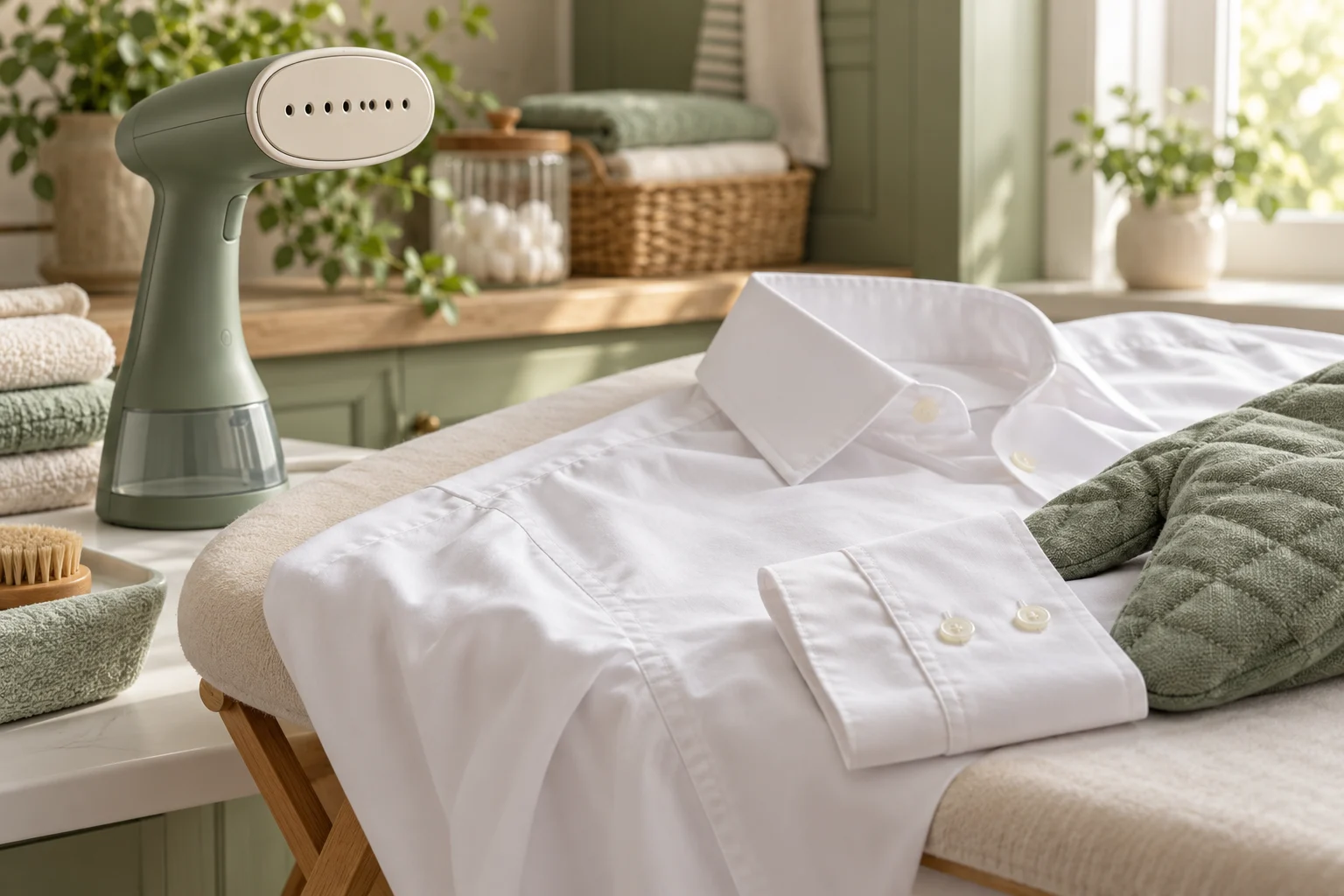
Shirt collars and cuffs are small, structured areas where steam can help relax storage wrinkles—but careless handling can soften the shape, set a new crease, or leave water marks. The goal is not to soak or flatten the fabric. It is to support the piece, use modest steam from the correct distance, and let it cool in the shape you want. Always begin with the garment label and the steamer instructions.
Read the care label first
Identify the fiber content, lining, interfacing, trim, and any “do not steam” or low-heat guidance. A cotton dress shirt may tolerate a different routine than silk, rayon, performance fabric, or a collar with adhesive interfacing. If the label calls for professional care, follow it. Test a hidden area when colorfastness or surface finish is uncertain.
Empty the pockets and remove collar stays if the shirt design allows it. Close only the buttons needed to hold the shape. Dirt and body oils can become more noticeable with heat, so steam a clean garment whenever possible.
Prepare clean water and a safe station
Use the water specified by the steamer manufacturer. Inspect the tank, cord, hose, plate, and vents before filling. Set up a heat-resistant padded surface or sturdy hanger in an open area. Keep children, pets, and bare feet away from the steam path.
Allow the steamer to heat fully, then test it on a towel until the steam is even and no droplets spit from the head. Water spots on a cuff are often caused by beginning before the unit stabilizes or by tilting a model that must remain upright.
Support the collar without crushing it
Unbutton the collar and spread it on a padded board with the underside facing up. Smooth it with cool hands before introducing steam. Hold the steamer at the distance required by its manual and move continuously from one end toward the other. Do not park the head over the collar points.
For the front side, turn the collar over and repeat with less steam. Use a heat-safe glove or a pressing tool only as directed; never place a bare hand behind the fabric. Shape the collar gently around the neckline, then let it cool before buttoning.
Handle cuffs one layer at a time
Unbutton barrel cuffs or open French cuffs completely. Lay one cuff flat so the layers are not folded over each other. Steam the inside first, moving parallel to the cuff edge. Turn it over and treat the outside only as much as needed. Keep buttons away from the hot plate and avoid directing steam into buttonholes for long periods.
If a cuff has a stubborn crease, do not fold it sharply in the opposite direction. Let the fabric cool, reassess, and use a second light pass. Multiple heavy passes can saturate the interfacing and make the edge look wavy.
Work from broad fabric toward structure
Steam the sleeve before finishing the cuff. Otherwise, handling the sleeve can wrinkle the cuff again. Start near the shoulder, move down the sleeve, and stop before the structured cuff. Then place the cuff on the padded surface for its final pass.
Use the same order for the collar: relax the upper body and yoke first, then finish the collar. This sequence reduces rework. Our guide to reading garment care labels before steaming explains the symbols that should control the overall plan.
Prevent shine and water marks
Shine can come from pressure, excessive heat, or direct contact on sensitive finishes. Keep the head moving and use the attachment or distance recommended for the fabric. Dark shirts should be inspected under angled light after a test pass. If the fabric darkens with moisture, stop and let it dry completely before deciding whether another pass is needed.
Mineral residue can leave pale marks. Maintain the steamer according to its descaling instructions and never add fragrance, starch, or cleaning chemicals to the tank unless the manufacturer explicitly allows it. A clean white cloth beneath the garment makes drips and color transfer easy to see.
Let the shape set while cooling
Steam relaxes fibers temporarily. Give the collar and cuffs time to cool and dry in the desired shape. Hang the shirt with space around it; do not put it immediately under a jacket or into a crowded closet. Keep cuffs open until they are dry.
For packing, cool the shirt completely before folding. Our guide to packing linen with fewer wrinkles offers folding principles that also help lightweight shirts. A freshly steamed damp collar can crease more deeply inside a suitcase.
When an iron is the better tool
Steam relaxes wrinkles but does not create the sharp edge some formal shirts require. If the care label permits ironing and you want a crisp crease, use an iron with a temperature appropriate to the fabric, a clean soleplate, and a pressing cloth where needed. Do not alternate rapidly between heavy steam and high-pressure ironing on an unknown interfacing.
Professional finishing is sensible for delicate fabric, fused structures that bubble, embroidered cuffs, or expensive formalwear. Stop if the collar surface ripples, adhesive odor appears, color transfers, or the fabric reacts unexpectedly.
A repeatable order
Inspect and test; steam the body and sleeves; support the underside of the collar; treat the outer collar lightly; open and steam each cuff; then hang the shirt to cool. Keep the steamer upright as required and refill only after unplugging and cooling according to its instructions.
The process should be deliberate rather than forceful. More steam is not a substitute for good support. A padded surface, small passes, and cooling time protect the structure while removing ordinary storage wrinkles.
Store the steamer and shirt correctly
After use, unplug the steamer, let it cool, empty it if required, and store the cord loosely. Do not place the hot head against the shirt or board. Make sure the collar stays are returned only after the fabric is fully dry.
Hang the shirt on a hanger wide enough to support the shoulders. Fasten the top button only if it helps maintain shape without pulling. With clean equipment and a consistent sequence, collars and cuffs can look smoother without losing the construction that makes them look intentional.