
Reviewed and updated: October 14, 2026
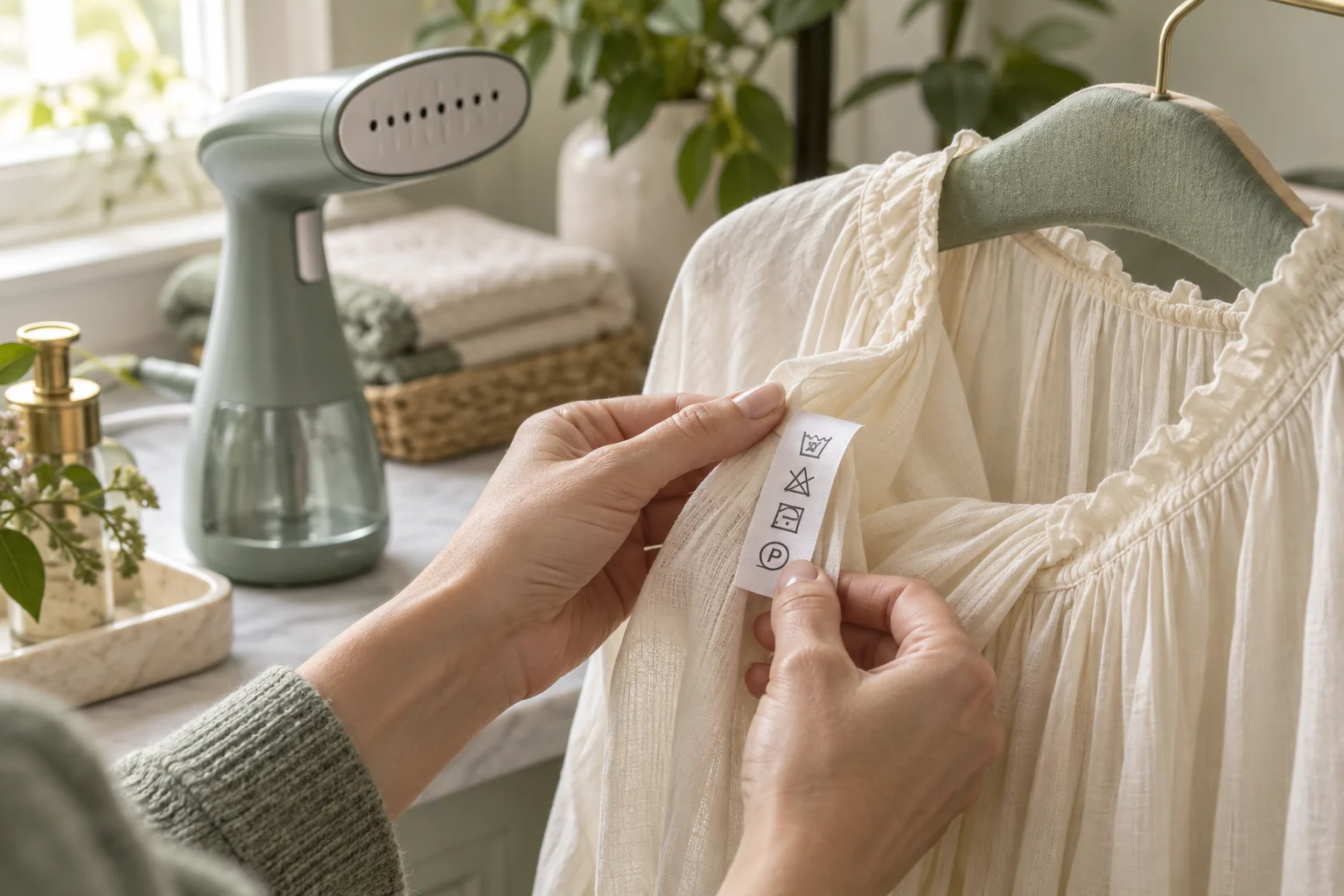
Find every label before you begin
The main care label is usually sewn into a side seam, waistband, collar, or pocket. A second label may list fiber content, trim, coating, or country of origin. Read all of them. A jacket shell, lining, adhesive, decoration, and shoulder structure may react differently even when only one fabric is named prominently.
If the label has been removed, the safest choice is to identify the brand and exact garment or consult a professional cleaner. Guessing from appearance is unreliable. Polyester, silk, rayon, wool, and coated synthetics can look similar under indoor light.
Separate washing symbols from ironing symbols
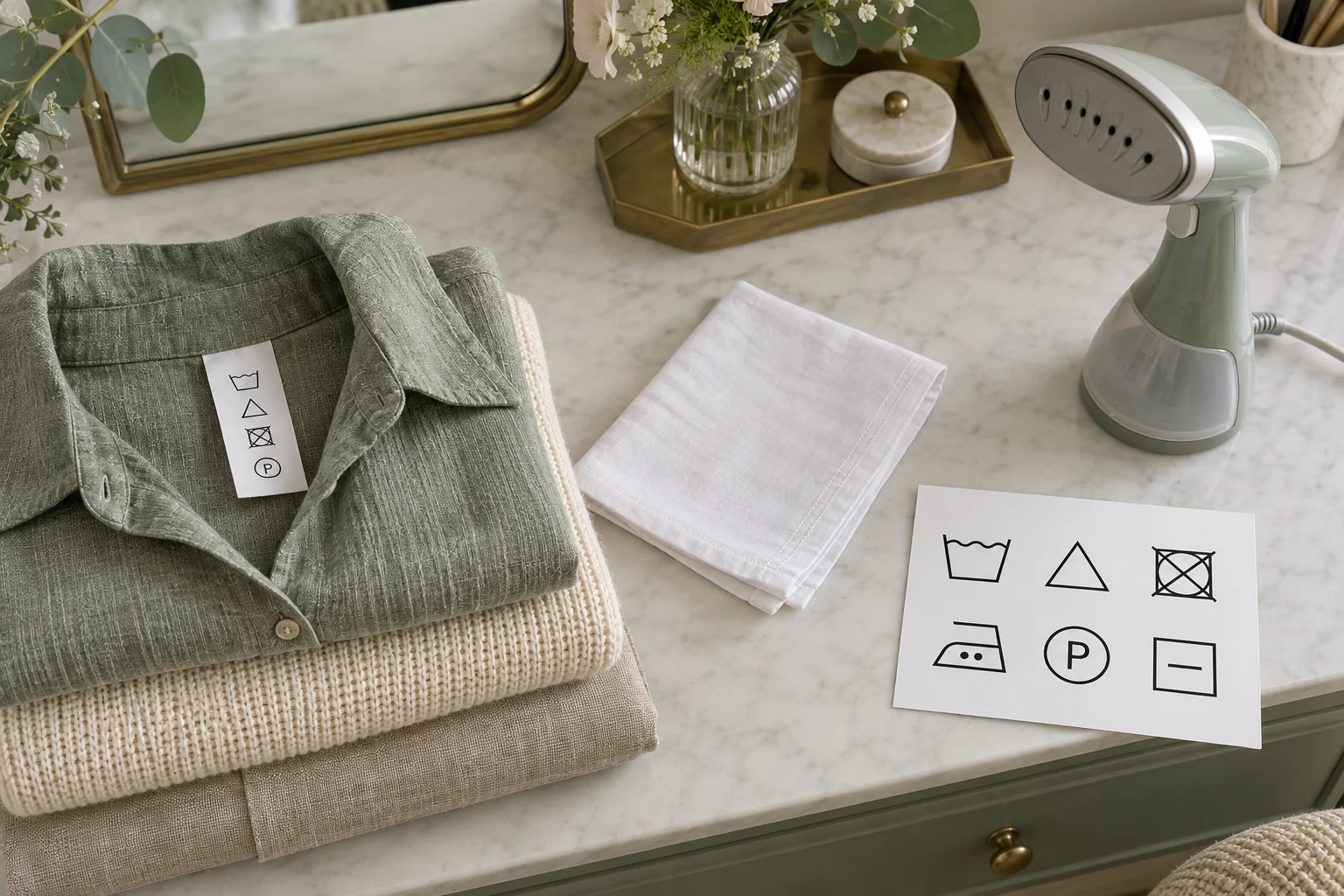
The wash tub, triangle, square, iron, and circle represent different care processes. Steam relates most directly to the iron symbol, but drying and professional-care instructions still provide context. A garment that should not be wet-cleaned may contain construction that also deserves caution around concentrated steam.
Use a current symbol chart from a reliable source, such as the FTC's care-label resources. Do not assume an icon means the same thing because it resembles a household object. The dots inside an iron communicate temperature limits, while crossed symbols prohibit the process shown.
Recognize no-steam instructions
An iron symbol with crossed steam lines means do not steam. Follow that direction even if the outer fabric seems sturdy. Steam can spot a finish, distort a bonded layer, soften adhesive, or affect hidden shaping. A crossed-out iron is an even clearer signal to avoid ironing and steaming.
Steam only is also a specific instruction found on some labels. It does not mean maximum steam at close range. Use the steamer according to its manual, keep the head moving, and test in an inconspicuous place when the garment maker permits.
Understand the dot temperatures
One dot inside an iron indicates low heat, two dots medium, and three dots high under the common ASTM system. A garment steamer does not always offer a direct temperature setting that maps neatly to those dots. Distance, steam output, fabric thickness, and how long you pause all influence the heat and moisture delivered.
Treat a low-iron symbol as a reason for extra distance and shorter passes, not permission to press the steamer head against the fabric. If your steamer has fabric attachments or output settings, use the maker's guidance for the fiber and garment construction.
Read the words, not only the icons
Labels may add instructions such as cool iron, steam only, iron on reverse, use press cloth, reshape while damp, or dry clean only. Words can narrow the meaning of a symbol and should not be skipped. Pay attention to phrases that exclude trim, decoration, or lining.
A label that says iron on reverse may be protecting surface texture or print. With steam, turn the garment inside out when practical and keep moisture away from leather patches, sequins, glued lettering, and heat-sensitive coatings unless their instructions say otherwise.
Identify mixed materials and hidden structure
A cotton-blend shirt may be straightforward, while a tailored blazer can contain fusible interfacing, padding, lining, and shaped lapels. Steam that relaxes the outer cloth can also disturb the internal structure if it is saturated or handled before cooling.
Hang structured garments on a broad, supportive hanger. Work from a little distance, use brief passes, and let each area cool before deciding whether it needs more. For expensive tailoring, vintage clothing, wedding wear, or garments with unknown repairs, professional advice is often the safer route.
Perform a controlled spot test
When the label allows steaming, test a hidden area such as an inside hem or seam allowance. Use the lowest effective output, one brief pass, and allow the spot to dry and cool completely. Check for color change, water marks, shine, puckering, stiffness, or texture loss.
A test is not a guarantee that every panel and trim will react the same way. It is one layer of caution. Stop immediately if dye transfers to a clean white cloth, the fabric develops an odor, or the finish changes.
Prepare the steamer and work area
Mineral buildup and residue can spit droplets onto clothing. Maintain the appliance as described in our guide to cleaning a garment steamer, and use the water type specified by its manufacturer. Inspect the hose, cord, tank, and steam head before each session.
Use a stable hanger and keep your free hand out of the steam path. Never steam clothing while someone is wearing it. Allow space around the garment and protect nearby surfaces from condensation. Our delicate-dress guide explains how to support fragile layers without pulling them out of shape.
Know when to stop
Pause if the label is contradictory, missing, or unreadable; if the garment combines unknown materials; or if you see bubbling, bleeding, shine, shrinkage, or a change in hand. More passes will not correct damage caused by too much heat or moisture.
Let the piece dry fully before reassessing wrinkles. Fabric often looks different while warm and damp. If the garment has sentimental or high replacement value, use a cleaner experienced with that fiber and construction rather than treating it as a learning sample.
A label-first steaming routine
Read every label, identify the fiber and trim, decode the iron symbol and wording, inspect the garment, prepare a clean steamer, test a hidden area, and begin with short passes at a safe distance. Let the fabric cool and dry on a supportive hanger before wearing or storing it.
The care label cannot answer every question, but it sets the boundaries. Following it protects both the fabric and any hidden construction. When the label says no steam, that is the decision. When it permits steam, restraint and observation produce a better result than maximum output.
Document special-care garments
For clothing you wear rarely, photograph the care label and save it with a picture of the garment. Include any cleaner's advice, known alterations, and the steamer setting that passed a spot test. This is helpful when several household members share laundry duties or when labels fade over time.
Do not let your note override a later change in condition. A repaired seam, loose embellishment, stain treatment, or aged coating can change how the garment responds. Inspect it again each time. If professional cleaning is specified, tell the cleaner about stains and prior home treatments instead of trying to erase the evidence with more heat. Accurate information helps the cleaner choose a safer process and prevents a small spot from becoming permanent damage.