
Reviewed and updated: October 15, 2026
Accept linen’s natural texture
The goal is not to make linen behave like synthetic wrinkle-resistant fabric. Soft, relaxed creases are part of its character. Focus on preventing deep folds, crushed collars, and twisted seams. A garment that fits the trip and can be refreshed at the destination is more practical than chasing a perfectly flat suitcase result.
Wash and dry before packing
Follow the care label, remove stains, and make sure the garment is completely dry. Packing even slightly damp linen can set wrinkles and create odor. Do not use heavy starch or an unfamiliar treatment immediately before travel. Test any product well in advance and let the fabric return to room conditions.
Button and align the garment
Fasten enough buttons to hold the shape, empty pockets, and smooth the placket, seams, cuffs, and collar. Lay the garment face down on a clean surface. Pull gently from the seams rather than stretching the fabric. Straight alignment at the start prevents diagonal creases that are harder to relax later.
Use wide, soft folds
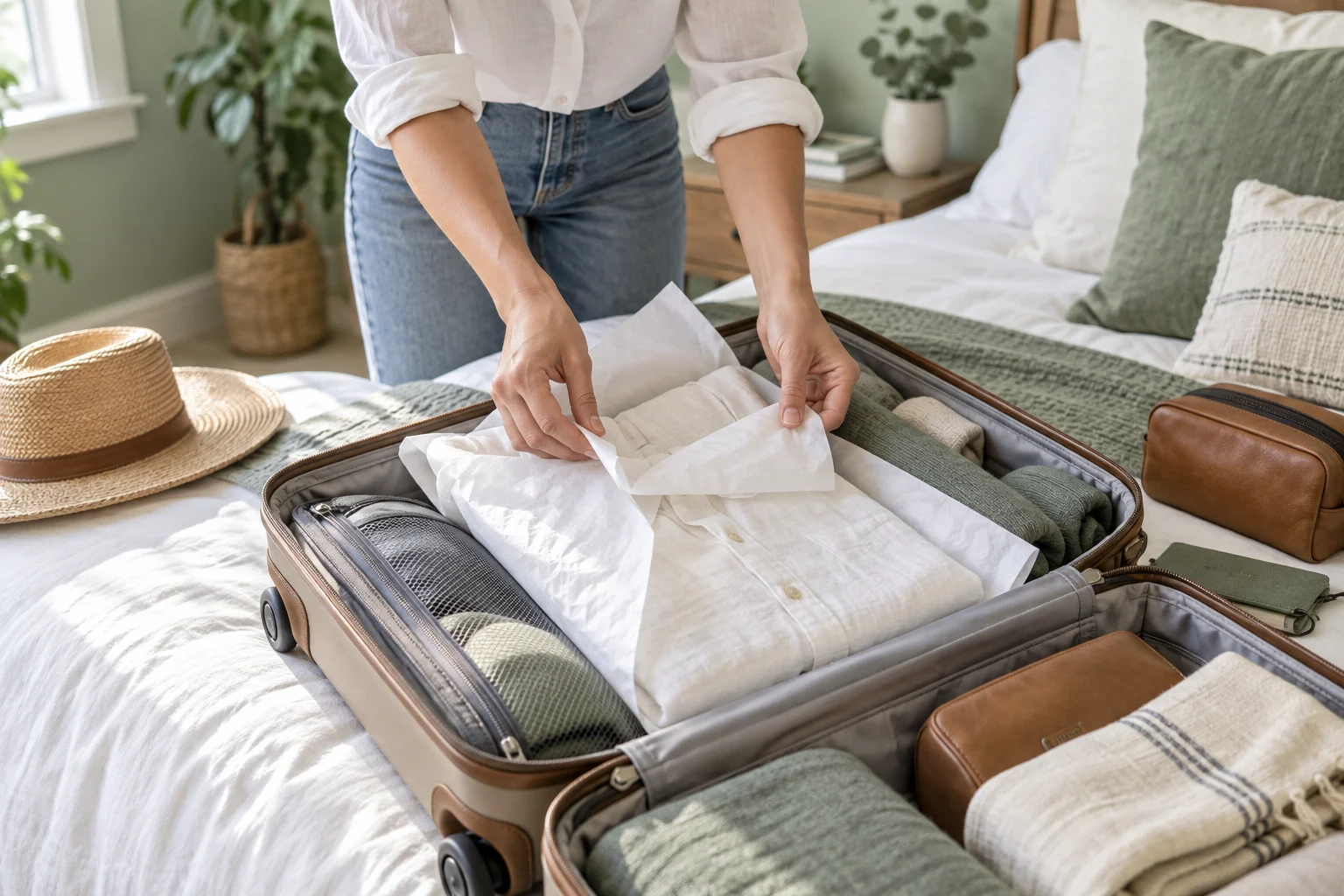
Fold sleeves along natural seam lines and make the body folds broad. Place acid-free tissue paper at major folds when appropriate for the fabric, or roll loosely if the garment and suitcase layout support it. Avoid tight elastic bands. Sharp compression creates the deep lines that take the most work to release.
Give linen a protected layer
Place the folded garment in a clean packing folder, breathable garment bag, or the smooth center of the suitcase. Keep shoes, toiletry bottles, and hardware from pressing directly against it. A plastic dry-cleaning bag may reduce friction for some travelers, but never use it around children and do not trap moisture inside.
Pack heavy items away from it
Put shoes and dense items near the suitcase wheels or frame, then cushion them with casual clothing. Linen belongs higher in the stack where pressure is lighter. Fill empty corners so contents do not slide, but do not overstuff the case. A suitcase that barely closes is likely to imprint every buckle and seam.
Unpack as soon as possible
Remove linen promptly, hang it on a supportive hanger, and smooth the seams with clean hands. Mild travel creases may relax in room air. Do not hang a wet garment in a closed closet. If the fabric needs more help, check the care label before choosing steam, an iron, or professional pressing.
Refresh with controlled moisture
When steaming is allowed, test an inside area, keep the nozzle moving, and avoid stretching softened fabric. Let the garment dry completely before wearing. For an iron, use the labeled temperature and a pressing cloth when appropriate. Never guess with coated, embellished, lined, or blended linen; those details can change the safe method.
A practical one-week plan
Use this guide as a short experiment rather than changing everything at once. Read the full process, choose the first step that addresses a real problem, and note what you are trying to learn. A written plan makes the result easier to judge and prevents an enthusiastic first day from turning into an inconsistent routine.
- Accept linen’s natural texture: write down the one choice you will test, keep the other variables steady, and review the result before adding another change.
- Wash and dry before packing: write down the one choice you will test, keep the other variables steady, and review the result before adding another change.
- Button and align the garment: write down the one choice you will test, keep the other variables steady, and review the result before adding another change.
- Use wide, soft folds: write down the one choice you will test, keep the other variables steady, and review the result before adding another change.
- Give linen a protected layer: write down the one choice you will test, keep the other variables steady, and review the result before adding another change.
- Pack heavy items away from it: write down the one choice you will test, keep the other variables steady, and review the result before adding another change.
- Unpack as soon as possible: write down the one choice you will test, keep the other variables steady, and review the result before adding another change.
- Refresh with controlled moisture: write down the one choice you will test, keep the other variables steady, and review the result before adding another change.
Review the result
At the end of the week, compare the outcome with your starting point. Keep the steps that were easy, safe, and useful. Revise anything that depended on guesswork, caused discomfort, or was difficult to repeat. When a product manual, care label, venue rule, or healthcare professional gives more specific direction, follow that guidance over a general article.
The best routine is understandable enough to explain and simple enough to perform the same way next time. Save the relevant links, keep a short note with the equipment or product, and schedule another review when conditions change. That small record turns a one-time tip into a dependable habit.
Questions to ask before the next attempt
What changed, what stayed constant, and what evidence supports the conclusion? Was the starting condition documented clearly? Did convenience or expectation influence the result? Answering those questions keeps the next attempt focused. It also helps another family member follow the same process without relying on memory or assumptions.
Take a fresh look in normal conditions rather than judging immediately. Note any safety warning, maintenance need, or storage issue that surfaced. If the result is unclear, repeat the smallest reasonable test instead of making several adjustments together. Consistency is more informative than complexity, and stopping is always appropriate when instructions, comfort, or safety are uncertain.
Keep the routine easy to audit
Store the instructions, notes, and any relevant model or product details in one place. Date the note so an older recommendation is not mistaken for current guidance. Before repeating the routine, confirm that the equipment, garment, product, location, or personal circumstances have not changed. Small differences can matter, and a quick review is usually easier than correcting a preventable mistake afterward.
Share the plan with anyone else who may use it. Clear steps reduce improvisation and make it easier to notice wear, discomfort, unexpected results, or missing information. Retire a step that no longer serves a purpose, and avoid adding a new purchase merely to make the routine look complete. Practical care comes from attention, appropriate limits, and decisions that can be explained.
Finally, revisit the original goal before calling the process finished. A routine is successful when it solves the stated problem safely and predictably, not when it contains the most steps. Keep the evidence that helped, discard assumptions that did not hold up, and make the next decision from the result you actually observed.