
Reviewed and updated: October 19, 2026
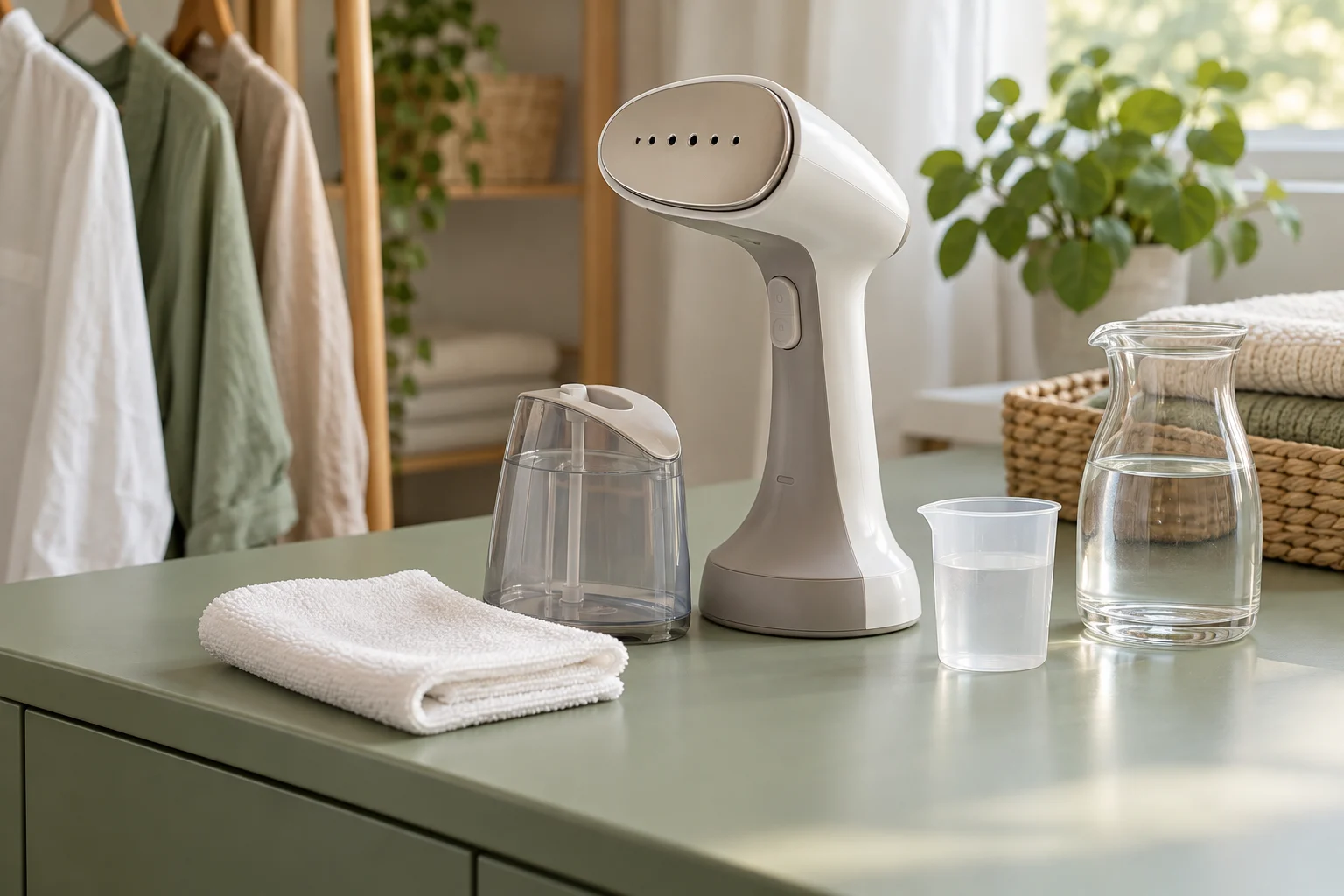
Mineral buildup can reduce steam output, but the wrong cleaner can damage seals, coatings, tanks, and heating systems. The exact manual decides what descaling means.
This guide was reviewed against current official product information where a model is discussed. Specifications and packages can change, so verify the exact label or manufacturer page before acting.
Identify the exact steamer
Find the model number on the label and download its official manual. Similar models can specify different water, flushing, or self-clean procedures. Do not use a vinegar recipe copied from another appliance unless your manual explicitly approves it.
Let the appliance cool
Unplug the steamer, place it on a heat-safe surface, and wait for complete cooling. Release and empty the tank only as directed. Never open a pressurized cap, touch a hot plate, or move the unit by its hose or cord.
Inspect before adding anything
Look for cracks, leaks, cord damage, loose connections, scale flakes, unusual odor, or discoloration. Descaling is not a repair for electrical or structural damage. Keep a leaking or erratic steamer unplugged and contact the maker or a qualified service provider.
Use the specified water and method
Some manuals call for a water rinse, some provide a self-clean cycle, and others specify a branded solution or service interval. Measure exactly, keep fluid away from electrical parts, and never mix chemicals. More concentrated cleaner is not more effective or safer.
Flush all residue
Complete every rinse cycle the manual requires. Residual acid or cleaner can spot fabric, irritate skin, damage components, or create odor when heated. Run the steamer only in the orientation and ventilated location the instructions allow, away from children and pets.
Test before returning to clothing
After reassembly, test steam over a sink or washable towel as permitted. Watch for brown water, flakes, spurting, leaks, odor, or unstable output. Stop and unplug if performance remains abnormal. Do not test first on a valuable garment.
Reduce future buildup
Follow the model’s water recommendation, empty the tank when directed, allow components to dry, and store the steamer without sharp hose or cord bends. Water guidance differs by local mineral content and appliance design, so preserve the manual with the unit.
Know when replacement is safer
Repeated clogging, damaged seals, a cracked tank, frayed cord, hot plug, or unpredictable controls need professional assessment or replacement. Do not tape, glue, or bypass a safety feature on an appliance that combines electricity, heat, and water.
Quick checklist
- Find the exact model manual.
- Cool and unplug before service.
- Reject damaged or leaking units.
- Use only the approved descaling method.
- Rinse every cleaner trace.
- Test away from clothing.
Why these checkpoints matter
- Find the exact model manual. This defines the starting condition and prevents the rest of the process from resting on an assumption.
- Cool and unplug before service. This narrows the choice to evidence you can verify on the exact label, model, or scene.
- Reject damaged or leaking units. This checkpoint reduces avoidable risk before another variable is introduced.
- Use only the approved descaling method. This keeps the routine compatible with the person, product, material, or equipment involved.
- Rinse every cleaner trace. This creates a repeatable step instead of relying on memory or marketing language.
- Test away from clothing. This final review catches changes in condition, availability, or instructions before the next use.
Common questions
Can I always use vinegar?
No. Vinegar can damage some systems. Use it only when the exact manual permits it.
How often should I descale?
Follow the manufacturer interval and adjust only through approved guidance for water hardness and use.
Why is brown water coming out?
It may indicate mineral residue or internal contamination. Stop, cool, inspect, and follow official cleaning or service guidance.
Keep the decision useful
Write down the exact model, label, starting condition, and result. Change one variable at a time and return to the official instructions when anything is unclear. A short record makes the next decision easier and keeps an isolated result from becoming a rule that does not fit a different product, person, material, or environment.
Review the information again before repeating the process. Stop when comfort, safety, condition, or the manufacturer’s instructions provide a reason to stop. A useful routine stays simple because every step answers a real question.
For the next attempt, note what improved, what remained uncertain, and what should stay unchanged. This final check reduces guesswork and helps small problems become visible before they turn into repeated mistakes.
Keep the original instructions, model information, and observations together. Before repeating the process, confirm that the product, setting, environment, and intended result are still the same.
Use the result as one observation rather than a promise. Conditions change, and the safest next step is the one supported by the current label, manual, evidence, and the limits you can verify.
Use the result as one observation rather than a promise. Conditions change, and the safest next step is the one supported by the current label, manual, evidence, and the limits you can verify.
Use the result as one observation rather than a promise. Conditions change, and the safest next step is the one supported by the current label, manual, evidence, and the limits you can verify.
Use the result as one observation rather than a promise. Conditions change, and the safest next step is the one supported by the current label, manual, evidence, and the limits you can verify.
Use the result as one observation rather than a promise. Conditions change, and the safest next step is the one supported by the current label, manual, evidence, and the limits you can verify.
Use the result as one observation rather than a promise. Conditions change, and the safest next step is the one supported by the current label, manual, evidence, and the limits you can verify.
Use the result as one observation rather than a promise. Conditions change, and the safest next step is the one supported by the current label, manual, evidence, and the limits you can verify.
Use the result as one observation rather than a promise. Conditions change, and the safest next step is the one supported by the current label, manual, evidence, and the limits you can verify.
Use the result as one observation rather than a promise. Conditions change, and the safest next step is the one supported by the current label, manual, evidence, and the limits you can verify.
Use the result as one observation rather than a promise. Conditions change, and the safest next step is the one supported by the current label, manual, evidence, and the limits you can verify.
Use the result as one observation rather than a promise. Conditions change, and the safest next step is the one supported by the current label, manual, evidence, and the limits you can verify.