
How to Let Clothes Dry After Steaming Without New Wrinkles
Choose the right support, allow gentle airflow, and check thick seams before wearing, folding, or storing freshly steamed clothes.
Reviewed and updated November 3, 2026 | By Wrinkle Free Steamer
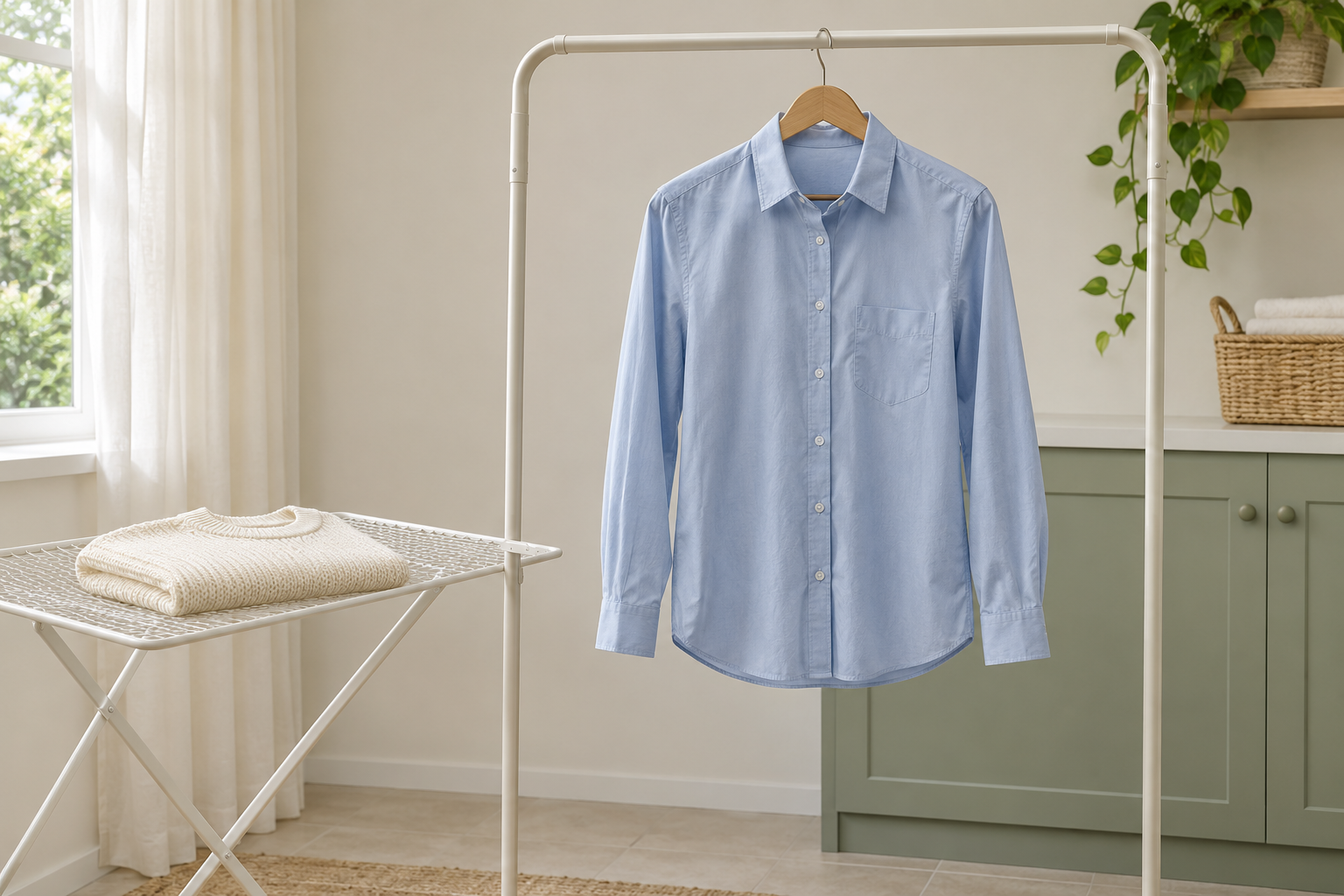
The last pass with a steamer is only part of finishing a garment. Warm, damp fabric needs room and suitable support before you wear it, fold it, or return it to a wardrobe. Rush that stage and a smooth shirt can acquire fresh sleeve creases, while a heavy knit can stretch on its hanger. Plan a drying place before you switch the appliance on, then judge readiness by the garment rather than a fixed countdown.
Start with the label and the garment’s structure
Check that steaming is permitted before treating any item. Fiber content alone does not tell you whether its lining, trim, adhesive, pleats, or surface finish tolerates moisture and heat. Our guide to reading care labels before steaming explains how to approach those limits. Follow professional-care instructions when the construction is uncertain.
Choose the support before starting. A woven shirt usually hangs naturally from a well-fitting hanger; a soft sweater may need to rest flat. Neither should touch a wall, door, or another damp garment. Clear enough space to arrange the whole item without folding its sleeves across the body.
Give woven clothes space to hang
For a shirt that can safely hang, use a clean hanger that supports the shoulder seams without stretching them. Let sleeves fall freely and straighten the hem gently before steaming. Leave space between garments so neighboring sleeves cannot press together. Fasten only enough buttons to keep the shirt balanced without pulling the front out of shape.
After steaming, leave the shirt in that open position. Avoid resting it over a chair back, which concentrates its weight across a narrow line. Keep trousers supported according to their construction rather than clipping a damp, delicate waistband tightly. Watch for a folded lining or pocket bag that traps moisture behind an otherwise dry outer layer.
Support knitwear flat
A moisture-heavy knit needs a different approach. Woolmark’s wool-drying guidance recommends flat drying for knitwear and explains that hanging wet knits can stretch them. For a steam-permitted sweater, use that support principle conservatively: rest it flat on a clean, suitable drying surface rather than suspending added moisture from its shoulders.
Arrange sleeves alongside the body and ease the garment into its natural outline without pulling. A mesh surface allows air underneath; a clean, pale, lint-free towel provides support where appropriate. If the towel becomes damp, replace it carefully without lifting the sweater by its neckline. Keep knitwear away from radiators and direct sunlight while it dries.
Separate cooling from drying
Fabric can feel cooler before every thick section is dry. Equally, a warm area does not automatically mean it needs another steam pass. Let the item rest and reassess it once the immediate warmth has gone. Check seams, cuffs, waistbands, hems, facings, and layers separately. They may hold moisture longer than a single panel.
There is no useful universal promise that every garment is ready in five or ten minutes. Fabric weight, steam exposure, room humidity, and airflow all affect the result. Build the pause into your dressing routine: steam early, finish another task, then return for a careful check. If the item still feels damp, give it more time.
Use gentle airflow without added heat
Choose a clean, ventilated indoor location away from splashes and cooking residue. Ordinary air movement helps moisture escape without making the fabric flap against surrounding objects. If you use a room fan, keep it stable and far enough away that the garment hangs quietly. Keep its cord clear of the steamer and any wet area.
Do not put clothing against a heater or try to finish a delicate section with a hair dryer. Local heat creates another care decision and can affect finishes or decorations. A closed, steamy bathroom is also a poor holding place. Move the cooled garment to a drier room if the first location leaves it persistently damp.
Inspect damp patches before doing more
Uneven dark areas can be moisture, but discoloration may also signal a different problem. Pause rather than repeatedly steaming the same patch. Allow it to dry naturally, then inspect in good light. If a ring, residue, color change, or distorted texture remains, follow the garment’s cleaning directions or consult a professional cleaner.
Check the appliance instructions if it spits droplets instead of producing steady steam. Use only the specified water and operating position. Never introduce fragrance or improvised cleaning mixtures to solve a garment mark. Let the appliance cool before any maintenance it requires. Our water-tank cleaning guide explains why the exact model’s instructions matter.
Check readiness with cool, dry hands
Once the hot steam and appliance are safely out of the way, inspect the garment with clean, dry hands. Compare thicker sections with a dry area of the same fabric. Look inside cuffs, along stitched edges, and under overlapping layers. Avoid pressing a palm hard into a smooth panel or squeezing delicate trim.
For an ordinary cotton shirt, a practical final check is simple: no remaining damp patches, no residual warmth, and no clammy seams or cuffs. This is a household check rather than a moisture measurement. If you cannot confidently judge a dense lining or heavy section, leave it out longer. Never check by wearing clothing while it is being steamed.
Fold or store only after the pause
Fold a cooled, dry garment on a clean surface with enough room to avoid bunching the sleeves. Keep the stack light and do not force a newly finished item into an overfilled drawer. When hanging, ensure the shoulders remain supported and neighboring clothing does not flatten the sleeves or collar.
For a suitcase, allow the same drying pause before folding and packing. Do not seal a damp garment in a plastic bag. Our seasonal clothes storage guide covers spacing and support for longer storage. Steaming is not a substitute for laundering, so put away only garments that are also clean enough for their intended storage period.
Make the drying station part of a small preparation routine. Check that the rack is stable, the hanger is clean, and the floor beneath it is dry. Leave enough clearance for the longest hem, including dresses and trousers, so fabric cannot rest on the floor. When several people share the room, choose a position where someone opening a door will not crush the garment. Keep the cooling appliance on its approved rest in a separate safe place. This small amount of preparation saves you from moving a freshly steamed item repeatedly while searching for somewhere to put it.
A simple finish you can repeat
Set out the correct hanger or flat support, steam within the care instructions, and stop once the wrinkles have relaxed enough for your purpose. Leave the garment undisturbed with room for air to circulate. Recheck the thickest areas after it cools, then wear, fold, or store it only when it is fully dry.
If a crease remains, assess it after this pause instead of adding more moisture immediately. Some structured edges need permitted pressing or professional finishing. A patient finish protects the work you have already done: suitable support, modest handling, and a complete drying check help clothing stay smooth as it moves from the steaming station to your wardrobe.