Best Pressing Cloths for Delicate Fabrics
A practical look at fabric compatibility, careful technique and the current Compact tool.
Reviewed and updated November 2, 2026
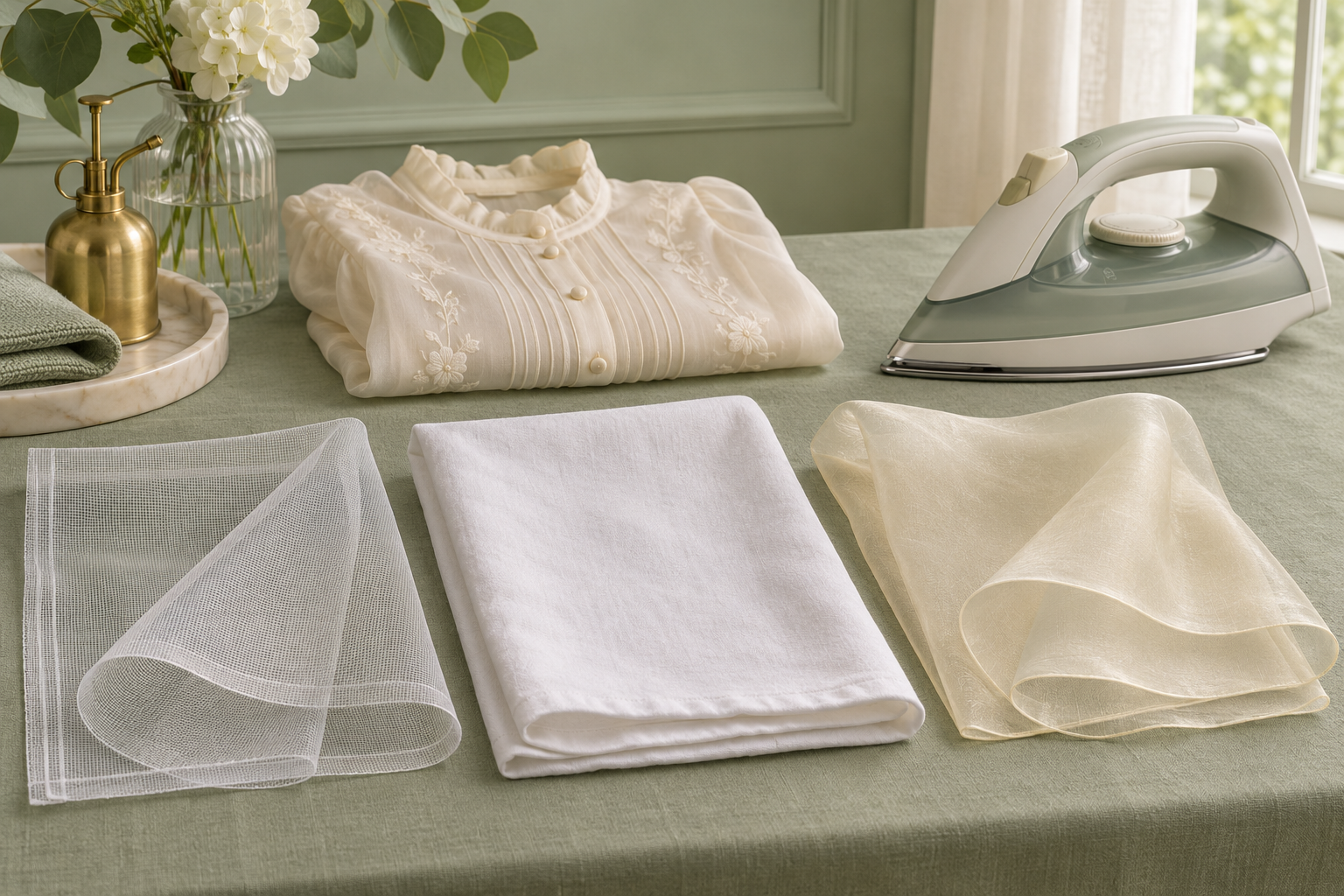
A pressing cloth is a removable barrier between an iron and a garment. It can reduce direct contact, help prevent shine and pressing marks, and make it easier to work around delicate surfaces. It cannot make an unsafe temperature safe, and it does not replace the garment care label. The useful comparison is not “which cloth is strongest?” but which material lets you see the work, carries the right amount of moisture, and tolerates the planned heat.
Dritz 82442 Press Cloth 11 x 28 Inch
A transparent press cloth intended to keep the garment visible. Confirm dimensions, care directions and fabric compatibility.
SINGER Pressing Cloth 14 x 24 Inch
A reusable barrier cloth for pressing. Compare material, size and the garment-label temperature limit before use.
Read the garment label first
Identify the fiber content, coating, decoration, and permitted care method before setting up the iron. “Delicate” can mean silk, wool, acetate, rayon, synthetic blends, lace, coated fabric, heat-transfer decoration, or an item with unknown construction. Those materials do not share one safe temperature.
If the label says do not iron, a pressing cloth does not override that instruction. Consider garment steaming only when the label permits it, and test a hidden area. Our garment care-label guide explains how to start conservatively.
Cotton pressing cloths
The Dritz 82442 is an 11-by-28-inch, 100-percent cotton pressing cloth. The current manufacturer description says it may be used with dry or steam ironing and can be lightly dampened when additional moisture is appropriate. Cotton is absorbent, washable, and familiar, making it useful for general pressing and for techniques that benefit from a little moisture.
The tradeoff is visibility. A solid cotton cloth hides the fabric underneath, so you must lift and reposition it to check seams, pleats, and decorations. That can be a benefit when you want a substantial barrier, but it requires patient placement.
Keep a white or colorfast cloth reserved for pressing. Dye, starch, detergent residue, or lint can transfer under heat. Wash and rinse it thoroughly, then store it clean and dry.
Lightweight and transparent cloths
The SINGER Pressing Cloth in the planned comparison is a reusable 14-by-24-inch barrier. Before ordering, verify the current package material, dimensions, care directions, and heat limits because similarly named pressing cloths can differ. A lightweight or transparent cloth can help you see the garment position while pressing, which is useful around darts, hems, appliqués, and detailed areas.
Transparency is not proof of high heat tolerance. Fine synthetic mesh can be damaged by temperatures that cotton tolerates. Use the lowest effective setting, follow the cloth instructions, and test with an offcut or hidden area. Stop if the barrier shrinks, wrinkles, develops odor, or sticks.
Organza and muslin alternatives
Silk organza is valued because it is sheer, strong, and relatively heat tolerant, but it must be genuine, clean, and undamaged. Polyester organza is not a direct substitute at high temperature. Unbleached cotton muslin is inexpensive and useful for general work, though it is less transparent.
Whatever material you choose, finish the edges so loose threads do not catch on buttons or embroidery. Avoid printed kitchen towels, textured terry cloth, and fabric softener residue. A pressing cloth should be smooth, colorfast, and dedicated to garment care.
Match moisture to the task
A dry cloth is appropriate when the garment and instructions call for dry heat. A lightly damp cotton cloth can help create steam at the surface, but it should not be dripping. Excess water can leave spots, distort some fibers, or carry dye.
Use distilled water only if the iron manufacturer recommends it; many irons are designed for tap water or a specific mixture. Never add fragrance, starch, vinegar, or other substances to the iron reservoir unless the manual permits them.
For wool, moisture and gentle pressure may help shape a seam, but rubbing the iron back and forth can stretch fabric or create shine. Press down, lift, move, and allow the area to cool in the desired shape.
Protect embellishments and surface texture
Turn garments inside out when possible and place a padded towel or pressing surface beneath raised embroidery, velvet, or textured details. A cloth protects from direct soleplate contact but cannot prevent every bead, adhesive, print, or synthetic decoration from softening.
Do not iron directly over sequins, plastic buttons, zippers with coatings, reflective transfers, or screen printing unless the item’s care guidance specifically permits it. Work around them or use an approved steaming method from the reverse side.
Our guide to steaming dresses and delicate fabrics covers spacing and hidden-area tests.
Use a safe pressing sequence
Set up a stable ironing board in good light. Check the soleplate for residue. Place the garment flat without tension, position the pressing cloth, and begin at the lowest suitable setting. Press a hidden section for a few seconds, lift the cloth, and inspect after the fabric cools.
Increase heat only within the garment label’s permitted range. Keep the iron moving between presses and never leave it resting face-down. If you need to reposition the garment, set the iron upright or on its approved rest first.
Heat effects may become more visible as fabric cools. Look for shine, flattening, color change, water marks, shrinkage, texture change, or adhesive movement. If any appears, stop rather than trying to correct it with more heat.
Keep the cloth clean
After use, let the pressing cloth cool on a clean surface. Inspect for transferred dye, scorch, melted material, starch, or adhesive. A contaminated cloth can deposit residue on the next garment.
Wash according to the cloth manufacturer’s directions and avoid fabric softener, which can leave a coating. Rinse well and dry completely. Store cotton, organza, and mesh cloths separately with a label showing their material and any heat restriction.
Replace a cloth with scorch damage, a hardened patch, melted fibers, or staining that may transfer. A pressing cloth is inexpensive compared with the garment it protects.
Choosing between the two formats
Choose the Dritz cotton cloth when you want an absorbent, substantial barrier for general pressing and do not need to see through it continuously. Consider the SINGER cloth after confirming its current material and instructions if visibility and lighter handling are more important for detailed placement.
Many sewing rooms benefit from more than one cloth: solid cotton for moisture and broad protection, plus a clearly labeled transparent cloth for precision. The right choice still begins with the garment label, a clean iron, conservative heat, and a hidden test. The cloth reduces risk; careful technique controls it.