
How to Steam Velvet Without Crushing the Pile
Practical guidance for caring for your clothes and equipment.
Reviewed and updated October 30, 2026
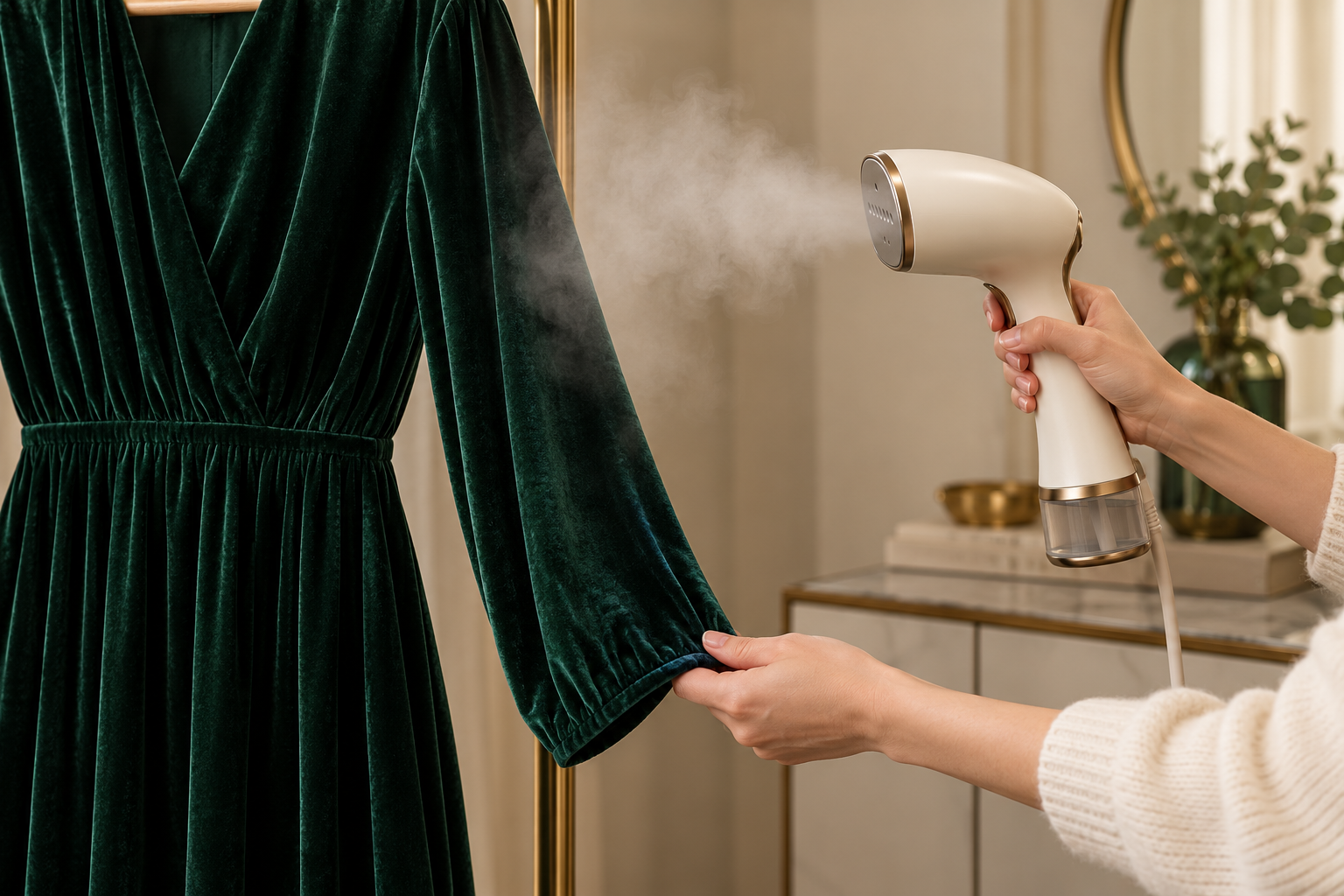
Velvet can show pressure, water marks, and direction changes quickly. Safe care begins with the fiber label and a hidden test, then uses gravity, distance, and minimal handling rather than pressing the steamer plate into the pile.
This guide was reviewed against current official product information where a model is discussed. Specifications and packages can change, so verify the exact label or manufacturer page before acting.
Identify the velvet before adding heat
Velvet describes a pile construction, not one fiber. Silk, rayon, acetate, cotton, polyester, and blends respond differently to heat, moisture, and pressure. Read the sewn-in care label and any retailer instructions. A dry-clean-only label, vintage garment, tailored structure, unknown dye, embellishment, or sentimental value is a reason to use a qualified cleaner rather than test at home. Do not assume upholstery velvet and clothing velvet share care rules. Photograph the item and any existing marks before work so a change is not mistaken for old damage.
Test an inconspicuous area
Choose an inside seam allowance or hidden hem and let the garment hang naturally. Prepare the steamer exactly as directed, then introduce a small amount of steam from the recommended distance without touching the pile. Let the area dry completely in ordinary light before judging color, sheen, texture, and hand. Wet velvet can look temporarily darker, so an immediate check is not enough. Stop if the pile flattens, dye transfers, spotting appears, backing softens, or adhesive and trim react. A failed test should not be corrected with more steam.
Hang the garment with support
Use a shaped hanger strong enough for the garment and fasten closures so the weight is distributed. Leave space behind it for airflow and keep the hem away from the floor. Do not clamp velvet with sharp clips or hang a heavy dress from narrow straps unless the construction supports that load. Protect nearby wood, art, outlets, and painted surfaces from steam. Work where children and pets cannot pull the cord. A heat-resistant glove may protect the supporting hand, but it does not make contact with the hot head safe.
Steam from the reverse when possible
The back of the fabric often allows moisture and warmth to relax wrinkles without pressing directly on the visible pile. Hold the steamer head away from the material and move continuously in vertical passes. Let gravity do the work; do not stretch the fabric or sandwich it between the steamer and a hand. If the lining blocks reverse access, use greater caution from the front and maintain the permitted distance. Never place a hot soleplate or steamer face flat against velvet unless the exact garment and equipment directions explicitly support it.
Follow the pile direction
Velvet has a nap that changes appearance depending on direction. Before steaming, lightly observe the direction with a clean hand on a hidden area; do not rub back and forth. Move the steam path consistently and avoid brushing wet pile. After the fabric is fully dry, a clean velvet brush or appropriate soft garment brush may lift the nap when the care guidance permits it. Brush in one direction with almost no pressure. Household hairbrushes, lint rollers with aggressive adhesive, and rough towels can mark or pull the surface.
Treat seams and crushed areas conservatively
Seams, hems, pockets, and lapels include extra layers that hold moisture and may have interfacing or adhesive. Use shorter passes and allow more drying time. For an isolated pressure mark, hover steam from the reverse and let the pile recover without pressing. Do not chase every shade change; velvet naturally reflects light differently as the nap moves. Deep crushing, iron shine, fused synthetic fibers, or distorted tailoring may not be reversible at home. A professional cleaner can evaluate whether specialized velvet boards or finishing equipment are appropriate.
Prevent water spots and mineral transfer
Use only the water specified by the steamer maker and fill below the maximum line. Let the unit heat fully and test the steam over a sink or towel before approaching the garment, because startup sputter can deposit droplets. Keep the hose unkinked and hold the appliance in its intended orientation. Blot accidental clean water only if the garment guidance allows, without rubbing the pile. If colored liquid, scale, or oily residue spits from the steamer, stop, unplug, cool, and clean the appliance before any further fabric use.
Let velvet dry before wearing or storing
Keep the garment hanging with airflow until every layer is dry and cool. Do not sit, belt, fold, pack, or cover damp velvet because pressure can set new marks. Once dry, inspect from several angles and in natural light. Store with enough space that neighboring garments do not crush the pile, using a breathable cover when appropriate. Empty and maintain the steamer as its manual directs. If odor, color change, stiffness, or spotting appears after drying, stop home treatment and consult a qualified textile professional.
Quick checklist
- Read the fiber and care label.
- Test and dry a hidden area first.
- Keep the steamer head off the pile.
- Work from the reverse when practical.
- Move with the nap and avoid rubbing.
- Dry completely before wearing or storing.
Why these checkpoints matter
- Read the fiber and care label. This defines the starting condition and prevents the rest of the process from resting on an assumption.
- Test and dry a hidden area first. This narrows the choice to evidence you can verify on the exact label, model, or scene.
- Keep the steamer head off the pile. This checkpoint reduces avoidable risk before another variable is introduced.
- Work from the reverse when practical. This keeps the routine compatible with the person, product, material, or equipment involved.
- Move with the nap and avoid rubbing. This creates a repeatable step instead of relying on memory or marketing language.
- Dry completely before wearing or storing. This final review catches changes in condition, availability, or instructions before the next use.
Common questions
Can I press velvet with an iron?
Direct pressure can crush or shine the pile. Follow the garment label and use professional care when pressing equipment or a velvet board is required.
Why did the velvet become darker?
Moisture temporarily darkens many fabrics, but persistent change after full drying can indicate spotting, pile change, or dye reaction.
Can I brush velvet while it is damp?
Usually wait until it is fully dry and use only a suitable clean soft brush when the care guidance permits it.
Keep the decision useful
Write down the exact model, label, starting condition, and result. Change one variable at a time and return to the official instructions when anything is unclear. A short record makes the next decision easier and keeps an isolated result from becoming a rule that does not fit a different product, person, material, or environment.
Review the information again before repeating the process. Stop when comfort, safety, condition, or the manufacturer’s instructions provide a reason to stop. A useful routine stays simple because every step answers a real question.