Oliso ProPlus Iron Review: Is Auto-Lift Right for Your Sewing Space?
A full-size iron that raises itself between presses, with clear advantages for sewing and a few practical compromises.
Reviewed November 17, 2026 | By Wrinkle Free Steamer
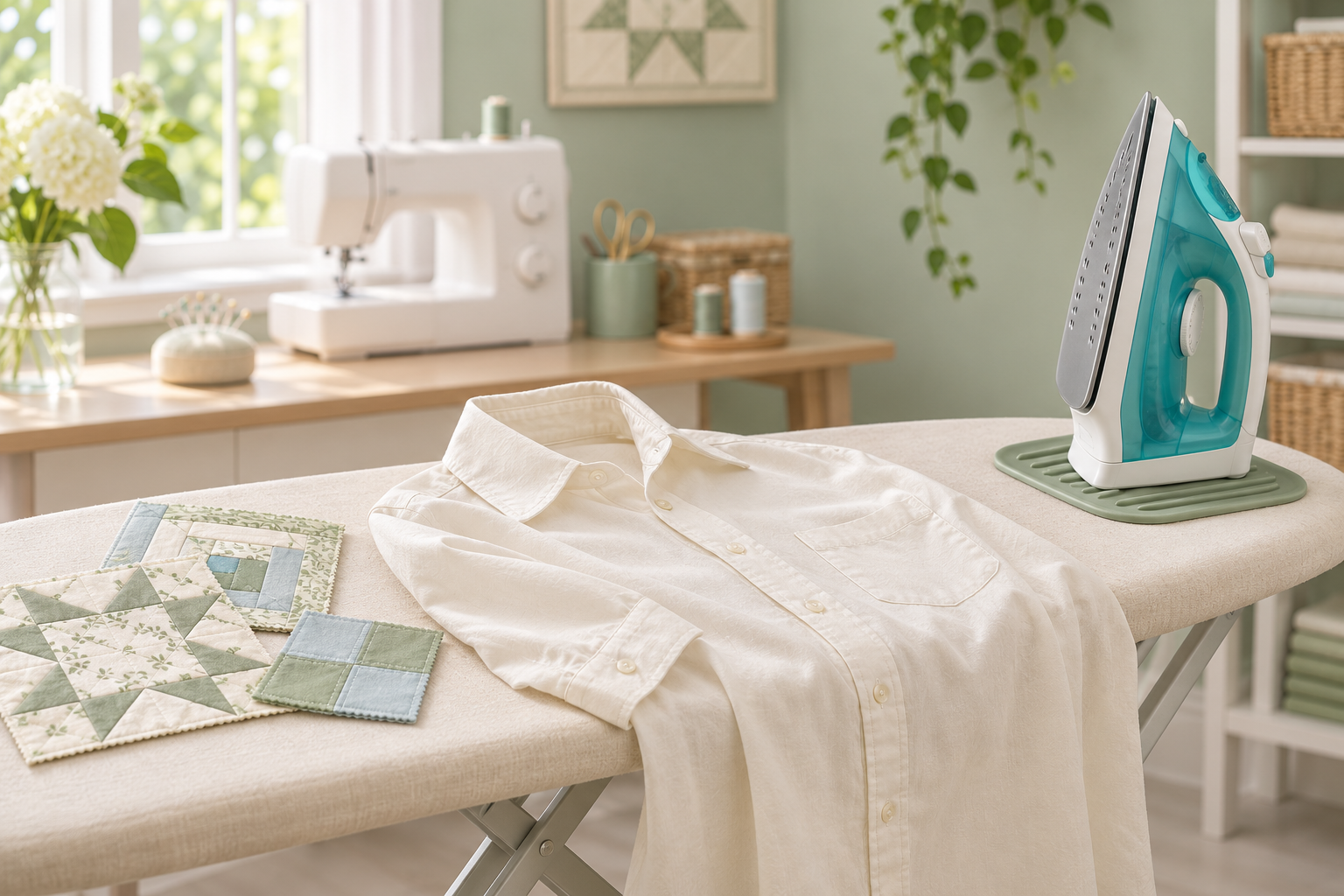
Pressing a seam, adjusting the fabric and returning to your sewing machine can involve as much putting the iron down as moving it across cloth. The Oliso ProPlus makes that pause its strongest selling point: release the handle and the iron raises its soleplate; touch the handle and it lowers again. We recommend it for a dedicated pressing space where you regularly move between sewing and ironing. Its full-size body also makes sense for clothes, though occasional shirt pressing alone gives you less reason to seek out the auto-lift design.
The decision is really about how you work at the board. You gain a different way to rest the iron between presses, plus room to tackle larger pieces. In return, you need space for a substantial appliance and a willingness to make its touch-sensitive handle part of your routine.
Auto-lift earns its place between presses
A conventional iron usually goes back onto its heel while you move a sleeve or line up the next seam. With the ProPlus, the small supports underneath extend when you let go. That lets the iron remain horizontal while its hot soleplate lifts clear. The appeal is especially clear when your work involves many short presses rather than one uninterrupted sweep across a garment.
Imagine working through several quilt blocks or constructing a shirt. You press, move the piece, then press again. Keeping the iron in its working orientation removes the repeated change from flat to upright. It does not make pressing automatic, and it does not remove the weight you carry while moving the iron. It simply changes one familiar, frequently repeated movement.
That distinction matters if weight is your main concern. The ProPlus weighs about 3.7 pounds empty; water adds to what you handle. We would not buy it on the assumption that auto-lift makes a full-size iron feel like a miniature one. It is more convincing when setting the iron upright is the particular movement you would welcome doing less often.
Room for panels, with a tip for smaller details
There is still plenty of ordinary ironing to do after a seam is finished. A shirt front, trouser leg or larger piece of fabric calls for a useful pressing area, and this is where a full-size iron has an advantage over a compact project model. You can work on the broad part of a garment and move into a smaller detail without changing tools.
The ProPlus combines a ceramic soleplate with a two-inch detailer tip. The pointed front is useful around pockets, cuffs and pleats, where a broad soleplate alone would feel less convenient. For garment sewing, that combination is appealing: you have a main iron for the larger cloth and a narrower front for the awkward parts of the same project.
Its substantial body remains the compromise. The iron measures roughly 11.7 inches long, five inches wide and seven inches high. A generous pressing station can accommodate that comfortably; a tiny surface crowded by fabric and sewing tools is a different proposition. Leave yourself working room beside the iron rather than treating the size of its resting spot as the whole space requirement.
Steam for sturdy cloth, control for a mixed wardrobe
Steam and a heated soleplate serve different parts of the job. Moisture helps with wrinkles, while the board gives you the support needed to press a fold or flatten a seam. The ProPlus offers variable steam, a steam burst and a water spray, alongside fabric-temperature settings. That gives you more flexibility than a single-temperature approach when cotton shirts share your laundry with other fabrics.
Your garment’s care label still determines the heat and moisture it can take. A powerful iron is useful because you can match it to the task, rather than because every piece benefits from its hottest setting. The collar and cuff guide is helpful when a shirt needs careful shaping around its smaller details.
The side-fill reservoir holds 375 ml. A larger tank is attractive for a sustained session, but it also makes a filled iron heavier. We would value that capacity most at a regular pressing station, where interruptions to refill are inconvenient and you are already comfortable using a full-size iron. You do not need to fill the tank completely for every small job.
A better match for a settled sewing space
The twelve-foot cord and swivelling connection give you flexibility in placing the iron relative to an outlet. That can help when the most useful board position is determined by your sewing table rather than the nearest wall socket. The extra length still needs a clear route away from hot surfaces and places where someone could catch it.
The extended thirty-minute standby is another sewing-friendly choice. It accommodates the pauses between pressing and stitching better than an iron that cools during every short break. There is also a thirty-second shut-off if tipped over. Neither feature makes it safe to leave a plugged-in iron unattended; turn it off and unplug it when you finish or leave the work area.
Auto-lift belongs on a stable, suitable pressing surface. A wool mat is not a hot-iron rest, even with the soleplate raised, and heat and steam can pass through a porous mat. That is worth allowing for when you plan a table-top station: the surface underneath needs appropriate heat and moisture protection as well.
ProPlus or a smaller project iron?
The Oliso M3Pro is the more appealing companion for a small pressing spot beside your machine. It is compact, has a light at the tip and uses an included silicone rest instead of auto-lift. It suits small details when easy placement matters more than having one full-size iron for the whole project.
We would choose the ProPlus as the main iron for a room where sewing projects and ordinary clothes both reach the board. The M3Pro makes more sense as a focused detail tool, particularly if you already own a larger iron. Buying the smaller model does not give you the ProPlus resting mechanism, and buying the ProPlus does not give you the smaller model’s footprint.
For mostly shirts and trousers, the CHI retractable-cord iron offers a different convenience: putting the cord away neatly. That is a more relevant benefit when your pressing space becomes living space after laundry day. The Oliso’s strongest case remains repeated pressing at an established station.
Our verdict on the Oliso ProPlus
The ProPlus is a thoughtful choice when you enjoy sewing and want your main iron to fit the rhythm of the work. Auto-lift is the reason to choose it; the broad pressing surface and detailer tip make it useful beyond that one feature. We would give it a settled place on a proper board, rather than squeeze it into a station designed for a compact iron.
Keep ownership straightforward: use plain tap water, or follow Oliso’s hard-water guidance, avoid pure distilled water, and empty the reservoir between sessions. With those practical needs accounted for, the purchase comes down to one question: would changing how you put the iron down improve the pressing you do most often?
Oliso TG1600 ProPlus Smart Iron, Turquoise
Our pick for a dedicated sewing space where frequent pauses between presses make the auto-lift design especially useful.