

Best Portable Handheld Steamers: 3 Current Picks (Updated 2026)
Current model numbers and practical tradeoffs checked for the 2026 refresh.
A current, label-first approach
Best Portable Handheld Steamers: 3 Current Picks (Updated 2026) works best when the process begins with the garment or surface instructions rather than a universal temperature or shortcut. Read every care symbol, identify trim and lining, and test a hidden area. The appliance manual controls water type, operating position, attachments and cleaning method.
Prepare a bright, uncluttered work area before heat or moisture is involved. Keep children and pets away, route the cord outside the walking path, and decide where the hot appliance will rest and cool. Never steam clothes while they are worn, point steam toward skin or leave a plugged-in appliance unattended.
Choose around real session length
Handheld steamers trade tank capacity for portability. For one or two garments, a light model and quick heat-up can matter more than maximum runtime. For upholstery or several outfits, grip comfort, refill method and steady output become more important. Confirm whether the model is approved for horizontal use before expecting iron-like contact.
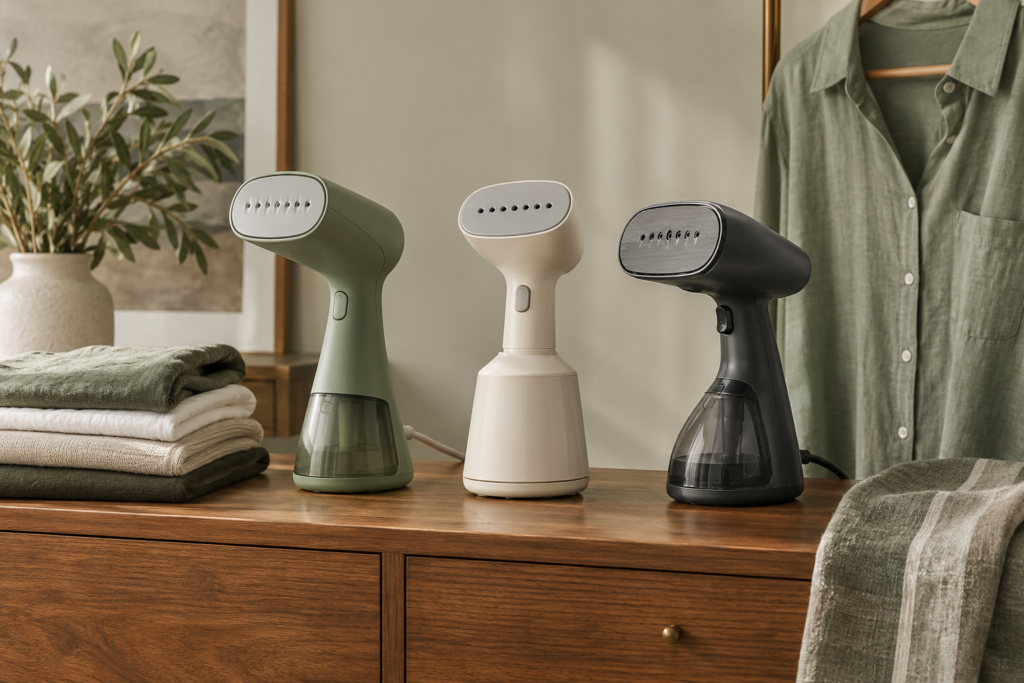
All three choices below remain supported on current manufacturer pages. The exact model number is more useful than a broad marketplace title, which may group older colors or versions.
Conair Steam & Press with Turbo
The current manufacturer page lists 40-second heat-up, a 7.3-ounce tank, regular and turbo modes, a heated quilted plate, built-in creaser and a three-part attachment. That combination is best suited to heavier everyday fabrics and buyers who want pressing help. Confirm the exact model number, voltage, included accessories and seller before ordering because marketplace pages can combine colors or generations.
Specifications help narrow a choice, but they do not reveal grip comfort, cord drag or how the appliance behaves on a particular wardrobe. Test it during the return window with a familiar cotton item and one fabric you use often.
BLACK+DECKER Advanced Handheld Steamer
The current manufacturer page lists 1400 watts, a preheat time under one minute, continuous and burst steam, three fabric attachments and a 15-minute inactivity shutoff. That combination is best suited to general home use and attachment flexibility. Confirm the exact model number, voltage, included accessories and seller before ordering because marketplace pages can combine colors or generations.
Specifications help narrow a choice, but they do not reveal grip comfort, cord drag or how the appliance behaves on a particular wardrobe. Test it during the return window with a familiar cotton item and one fabric you use often.
Rowenta Pure Pop Handheld Steamer
The current manufacturer page lists an 1150-watt compact design with a 15-second heat-up, 20 g/min output and a 2.4-ounce removable tank. That combination is best suited to fast touch-ups and light travel. Confirm the exact model number, voltage, included accessories and seller before ordering because marketplace pages can combine colors or generations.
Specifications help narrow a choice, but they do not reveal grip comfort, cord drag or how the appliance behaves on a particular wardrobe. Test it during the return window with a familiar cotton item and one fabric you use often.
Test while the return window is open
Use the same clean cotton item or approved surface for a first test. Record real heat-up time, balance, refill effort, cord reach and whether steam remains steady. Then test one representative task from the normal routine. This reveals usability differences that a specifications table cannot capture.
Keep the packaging, manual and order record until the evaluation is complete. If replacement tanks, brushes, pads or scale-care parts matter, confirm that they are listed for the exact model. Do not substitute an attachment merely because it looks similar.
Make the process repeatable
Keep a small note of the fiber, setting, working distance and number of passes that produced a good result. That record is more reliable than memory when the same garment returns months later. Photograph an unusual care label and store the model manual with the appliance. If several people share the tool, label accessories so a brush or tank is not forced onto the wrong model.
Inspect the finished piece only after it has cooled and dried. Heat and moisture can temporarily hide ripples, shine or damp spots. Check seams, lining, prints and decorations in normal room light. Stop when the item is presentable rather than adding repeated heat in pursuit of a perfectly flat surface that the fabric was not designed to hold.
Clean, cool and store safely
Unplug by the plug, not the cord, and let the appliance cool on the surface its manual specifies. Empty the reservoir when directed and allow removable pieces to dry before reassembly. Keep cords loose, hoses free of sharp bends and soleplates protected from scratches. Do not store a warm appliance in a closet or suitcase.
Scale, lint and residue can change steam flow over time. Follow the exact maintenance interval and method for the model. Avoid improvised vinegar, fragrance or cleaning mixtures unless the manufacturer explicitly approves them. Stop using any appliance with a damaged cord, persistent leak, cracked tank or behavior that differs from the manual, and contact the maker for service guidance.
Use the care label as a stop sign
A crossed-out iron, crossed-out wash symbol or dry-clean-only direction changes the plan immediately. The outer fabric is only one part of a garment; interfacing, lining, coatings, prints and adhesive can have lower limits. When the label is missing or unclear, test the least visible area with the lowest practical heat and moisture, or use a professional cleaner for a valuable item.
Do not treat colorfastness, heat tolerance and water tolerance as the same property. A fabric can keep its color while shrinking, shining or losing shape. Conservative testing protects the garment and produces advice that can be repeated instead of relying on a lucky first result.
Plan the entire workflow
Setup, cooling and storage are part of the job. Place hangers, pressing cloths and a clean towel within reach before switching on an appliance. Work on one garment at a time so a hot tool is never balanced while the next item is prepared. Keep finished pieces apart from damp laundry and give them room to cool.
For travel, confirm voltage and plug compatibility before leaving home, drain every reservoir and protect hot surfaces after they are fully cool. For household storage, choose a dry shelf where tanks, cords and hoses will not be crushed. A convenient, safe setup makes good garment care easier to repeat.
Know when to stop
Stop immediately if the material changes shine, texture, color or shape, or if the appliance leaks, spits repeatedly or smells electrical. Unplug it and let it cool before inspection. More heat rarely corrects a problem caused by too much heat. Valuable tailoring, vintage fabric, leather, suede and complicated decoration deserve specialist advice when the label is uncertain.
A practical result preserves the item while reducing visible wrinkles or improving organization. It does not require forcing every fabric into the same crisp finish. Texture and drape are design features, and protecting them is part of good care.
Editorial note: Product links, where relevant, use the site-specific Associate code wfsteamer08-20. Editorial body word count: 1194.