Steamery Lint Brush vs. Clothing Brush: Which Suits Your Wardrobe?
A reusable roller alternative or a traditional wooden brush: choose for the fabric and surface debris you deal with most.
Reviewed November 18, 2026 | By Wrinkle Free Steamer
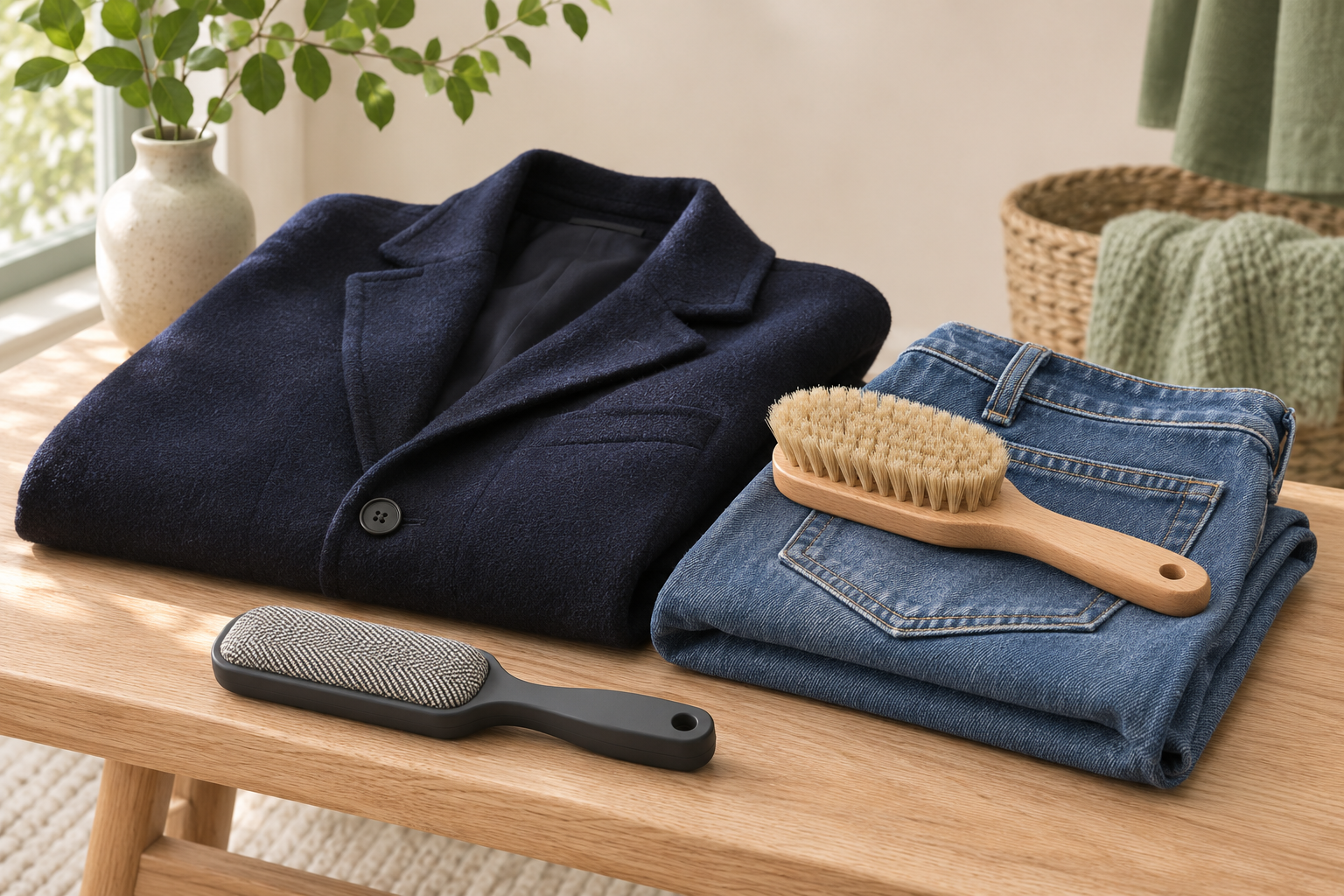
A dark jacket can be clean and still look covered in fluff. For that everyday tidy-up, we would start with the Steamery Lint Brush: its directional fabric surface collects loose hair, dust and lint without disposable adhesive sheets. The wooden Clothing Brush is the better fit when your main concern is surface dirt on denim, substantial outerwear or sturdy upholstery. They overlap, but their different bristles make them useful for different wardrobes.
Think about what you actually remove most often. A few stray hairs before leaving home point toward the Lint Brush. A more substantial brush for giving durable garments a once-over points toward the Clothing Brush.
The Lint Brush is the closer roller replacement
Steamery’s Lint Brush looks quite different from a traditional wooden clothes brush. Its working surface is a polyester weave with tiny bristles angled in one direction. Move it against that angle and the surface catches loose fibers and hair. There is no sticky sheet to peel away after each pass, which makes it appealing when you regularly reach for a lint roller before putting on dark clothes.
The direction matters more than pressure. You need a deliberate stroke in the working direction; scrubbing back and forth will not collect debris properly. That is a small habit to learn, but it is central to the purchase. We would choose this design when you are happy to replace the familiar rolling movement with a directional brushing movement.
It is also convenient to empty. Twisting the handle a few times cleans the brush surface and transfers the collected material into an internal container. Press the top lid to open it and discard what has gathered. You still have a little cleaning to do, but it is emptying a reusable tool rather than replacing an adhesive roll.
For a hallway or dressing-area brush, that combination is useful: loose lint collection and a built-in way to clear the surface. The Charcoal version has an ABS-plastic body and measures about 7.3 inches long. We would think of it as a tool to keep readily accessible at home or in a bag, rather than something that needs its own garment-care setup.
Steamery Lint Brush Charcoal
Our starting pick for everyday loose lint and hair when you want a reusable alternative to adhesive rollers.
The Clothing Brush suits a sturdier wardrobe
The wooden Clothing Brush offers a more traditional approach. Its oak body, sisal bristles and cotton hanging cord make it an entirely vegan option. More important to the buying decision is what those bristles are for: brushing surface dust and shallow dirt from thicker fabrics, including denim, outerwear and suitable home textiles.
That makes it attractive when your wardrobe includes substantial jackets or denim you like to keep presentable between proper cleans. It is a surface-care tool you can take to the garment as a whole, rather than a brush chosen mainly for a few conspicuous hairs. The hanging cord also gives you a straightforward place to keep it beside a coat rail.
The firmer approach is the compromise. We would reserve it for robust fabrics rather than buy it as a universal brush for everything in your wardrobe. Sheer silk, chiffon, loose decoration and delicate surfaces call for a more cautious choice. The gentler-looking shape of a wooden brush does not by itself tell you whether its bristles suit a particular garment.
Those materials may also matter to you. The wooden model gives you plant-fiber bristles rather than an animal-hair brush, while the Lint Brush uses a synthetic woven surface. Both are vegan. Reusable does not mean they are made the same way, so a preference for natural materials can help settle the decision once fabric suitability is established.
Steamery Clothing Brush Wood
We recommend the wooden brush for a wardrobe of denim and substantial outerwear that needs regular surface brushing.
Match the brush to the annoyance you notice
Pet hair on a dark trouser leg is an easy reason to favor the Lint Brush. Its directional surface and collection container are directly relevant to that job. It can also be used on upholstery, so it may fit both your dressing area and a suitable fabric chair. That does not mean every textile will react in the same way: try a small, inconspicuous area before working across a delicate or unfamiliar surface.
On a larger upholstered surface, the amount of brushing also matters. A garment brush is useful for a localized patch of hair or lint, but a whole sofa involves more manual work than a trouser leg. We would buy either of these primarily around the clothes you wear, with suitable home textiles as an additional use.
Neither brush replaces stain treatment or the cleaning method on your garment’s label. A visible hair sitting on a coat is one problem; a spill or embedded soil is another. Keeping that distinction in mind helps you buy a useful accessory without expecting it to handle the whole laundry basket.
Loose lint is different from attached pills
Small balls attached to a sweater are a different buying problem again. A lint brush can collect loose material from the surface, but you should not expect it to do the cutting job of a fabric shaver. Buying the wrong tool here can leave you repeatedly brushing a garment whose main issue has not changed.
The fabric-shaver comparison is the more relevant next step when attached pills are what bother you. For loose pet hair and fluff, stay with the brush decision. A reusable pet-hair brush you already like is worth keeping; a pilled sweater may simply need a different tool.
A reusable tool still needs a little attention
The Lint Brush’s container is especially appealing if clearing the brush is the part of garment care you tend to postpone. Its twist-and-empty arrangement gives you a defined way to finish the job. With the wooden brush, there is no internal collection chamber; remove trapped debris from the bristles so the tool is ready for the next garment.
Neither option needs power, charging or adhesive refills. That is useful when you want a simple accessory you can pick up for a small job, but it does not make either brush maintenance-free. We would make room for the one whose working surface and cleaning arrangement you will actually use.
Which Steamery brush would we buy?
The Lint Brush is our starting recommendation for loose hair, lint and dust on everyday clothes, particularly when you want to move away from disposable tape rollers. The wooden Clothing Brush earns its place when thicker fabrics and light surface dirt are the regular challenge. Its natural-material construction is appealing, but that is a reason to prefer it within the right use case, not a reason to overlook fabric suitability.