Oliso M3Pro Review: A Compact Iron for Detailed Sewing Projects
A lit precision tip and controllable steam make a compelling sewing companion, with a smaller plate and tank to weigh against your usual projects.
Reviewed November 12, 2026 | By Wrinkle Free Steamer
A small iron with a clear purpose
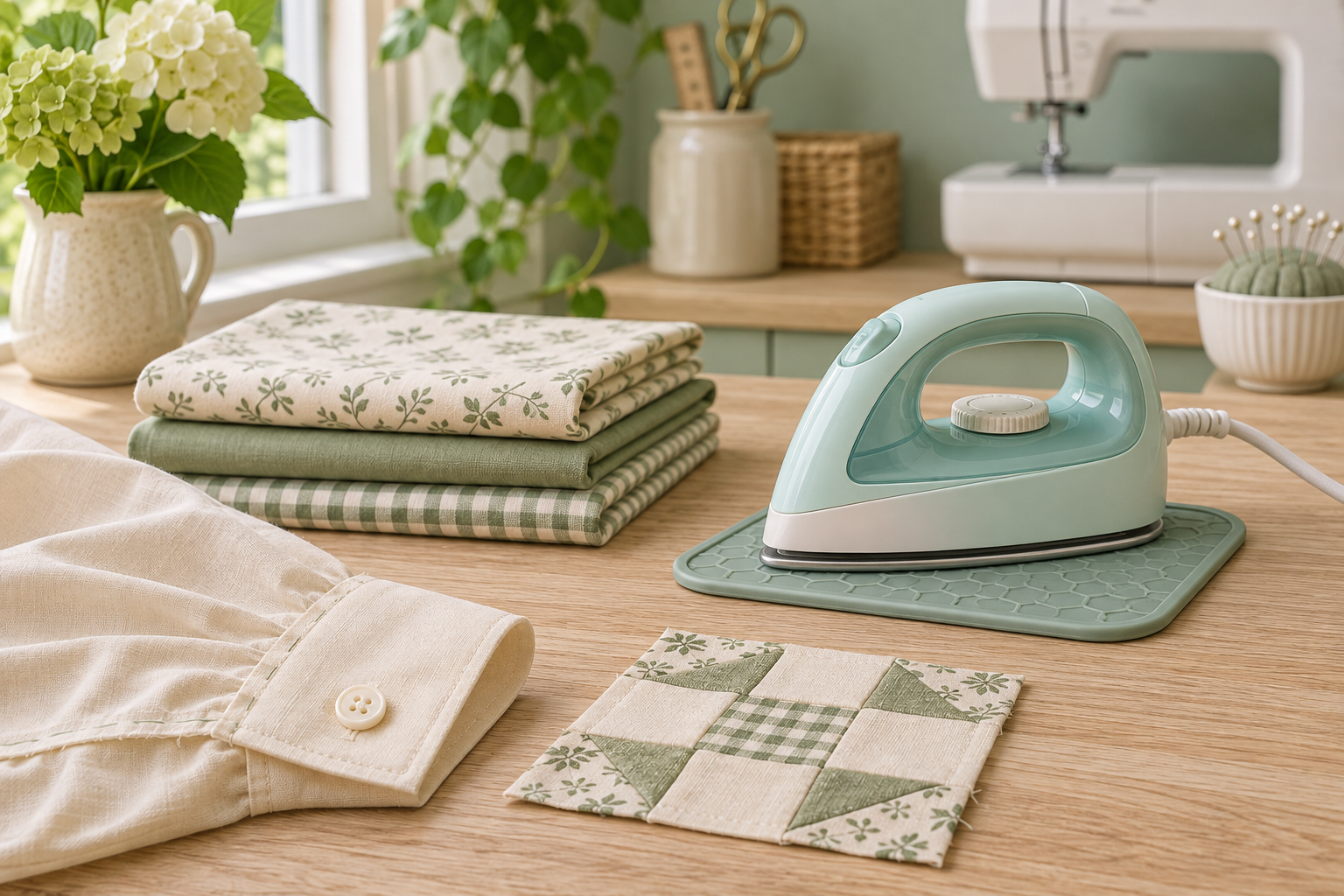
Narrow seams and fiddly corners are where the Oliso M3Pro makes the most sense. We recommend this compact project iron for a pressing spot beside your sewing machine, especially when you alternate between stitching and small, precise jobs. Its illuminated tip, separate steam zones and included silicone rest form a useful package for that work. For a basket of shirts or a large sheet, we’d keep a full-size iron instead: a smaller pressing surface means covering less fabric at once.
That distinction matters more than the word mini. You aren’t simply buying a smaller version of your usual iron to save cupboard space. The M3Pro is appealing because its shape and controls suit working close to seams, cuffs, pockets and little fabric pieces. It can complement a regular iron particularly well, leaving the larger appliance to handle broad panels while the project iron stays near the work in progress.
The tip and light are the main attraction
Oliso gives the M3Pro a two-inch detailer tip and an LED light directed toward the tip and fabric. Around a narrow seam allowance or the corner of a pocket, those features have a clear role: helping you place the heated surface where you want it and see the area you’re working on. They make a stronger buying argument than the cheerful aqua color, though an appliance you like seeing on your table has its own appeal.
The ceramic-coated soleplate measures six inches long and 3.6 inches wide. Think of that as a preference for smaller working areas rather than a promise of faster ironing. A cuff, bias binding or patchwork unit gives the compact plate a useful job; a wide shirt back makes you move it across more separate areas. Your usual projects should decide whether that tradeoff is welcome.
A palm-fitting body also changes how you hold the iron compared with a tall, full-size handle. That can suit close positioning, but compact doesn’t automatically mean weightless: the iron is listed at two pounds. If weight or grip is your main concern, consider both that figure and the body shape rather than assuming every small iron will feel easy in your hand.
Steam where the project needs it
Two buttons control front and rear steam zones independently, and you can press both for a combined burst. That gives you a useful choice between directing steam toward a detail and using both zones over a broader section. It is a more relevant feature for stop-and-start pressing than a headline wattage figure alone.
The important limit is temperature. Steam is intended for the high, three-dot setting, so the presence of a steam button doesn’t make steam appropriate for a fabric that needs lower heat. The selector offers different fabric settings; match those to the garment or project instructions. You can still value the compact shape for dry pressing without expecting every material to accept the hottest setting.
The 50 ml tank is another sign of the intended scale. Unplug the iron and let it cool before refilling. It keeps the reservoir small, but longer steam-heavy sessions will involve refilling. For a few seams between sewing steps, that may be a reasonable compromise. For continuous household ironing, a larger tank and soleplate are likely to matter more than the ability to direct a burst toward one small area.
There is some ownership care to allow for, particularly if your projects involve starch or fusible materials. Residue on the soleplate needs cleaning, rather than being carried onto the next piece of fabric. Oliso’s directions call for cleaning the cool plate with a soft damp cloth or an appropriate soleplate cleaner, avoiding abrasive pads. That is worth factoring into a sewing station: the finish on the iron needs as much consideration as the fabric beneath it.
Older Oliso mini irons have different features from the M3Pro.
Oliso M3Pro Project Iron, Aqua
The lit detailer tip and separate steam zones make this worth considering for small garment and sewing projects.
A useful rest, without automatic lifting
The included Solemate silicone rest lets you put the hot iron down on its designated resting side between pressing steps. That is a practical part of a small station: you have a defined place for the appliance while your attention returns to the sewing machine. Keep the station flat, stable and clear of fabric scraps or trailing cords.
Don’t confuse this with the automatic lifting system on Oliso’s Smart Irons. The project iron doesn’t rise away from the fabric when you release it. You still place it on its heel or the proper rest. That difference can decide the purchase if automatic lifting is the specific convenience that first drew you to the brand.
Its standby timing suits pauses during a project: Oliso specifies 30 minutes on the heel, ten minutes horizontally and a 30-second shut-off if tipped over. These are backup features, not permission to leave it unattended. Switch it off and unplug it when you’re done, and let it cool completely before attaching the storage side of the Solemate.
Make room for the pressing surface, too
The M3Pro takes up roughly 7.9 by 4.4 inches, with an eight-foot cord on the US and Canada version. That gives you a compact appliance and some reach from the outlet, but you still need a suitable heat-resistant pressing surface. A bare desk isn’t a complete ironing station, and the wool mat and fill cup pictured on the product page aren’t included.
A nearby compact ironing board may be the more useful addition if you haven’t yet arranged a supported place to press. For a sleeve or other narrow garment section, a sleeve board offers a different kind of help: support underneath the fabric. A small iron and a shaped board solve related problems, but one doesn’t replace the other.
Automatic voltage adjustment covers 110/120 and 220/240 volts, which is handy for taking the iron to a class or project session abroad. You’ll still need the appropriate plug adapter where sockets differ. We’d regard that as a useful extra rather than the central reason to buy it; its strongest case remains detailed pressing, not merely fitting into luggage.
Would we add it to the sewing table?
Yes, when small pressing jobs are a regular part of what you make. The M3Pro brings a focused set of conveniences to that station, with its light, tip, steam control and rest working toward the same purpose. We’d pass on it as the only iron for large household loads, or choose an Oliso Smart Iron instead if automatic lifting is essential. Buy the project iron for the work its compact shape makes more convenient.