
Brabantia HangOn 25 m: Should You Buy the Version With a Rod?
Compare hanger space, storage bulk, and garment support before choosing your drying rack.
Reviewed and updated November 5, 2026 · By Wrinkle Free Steamer
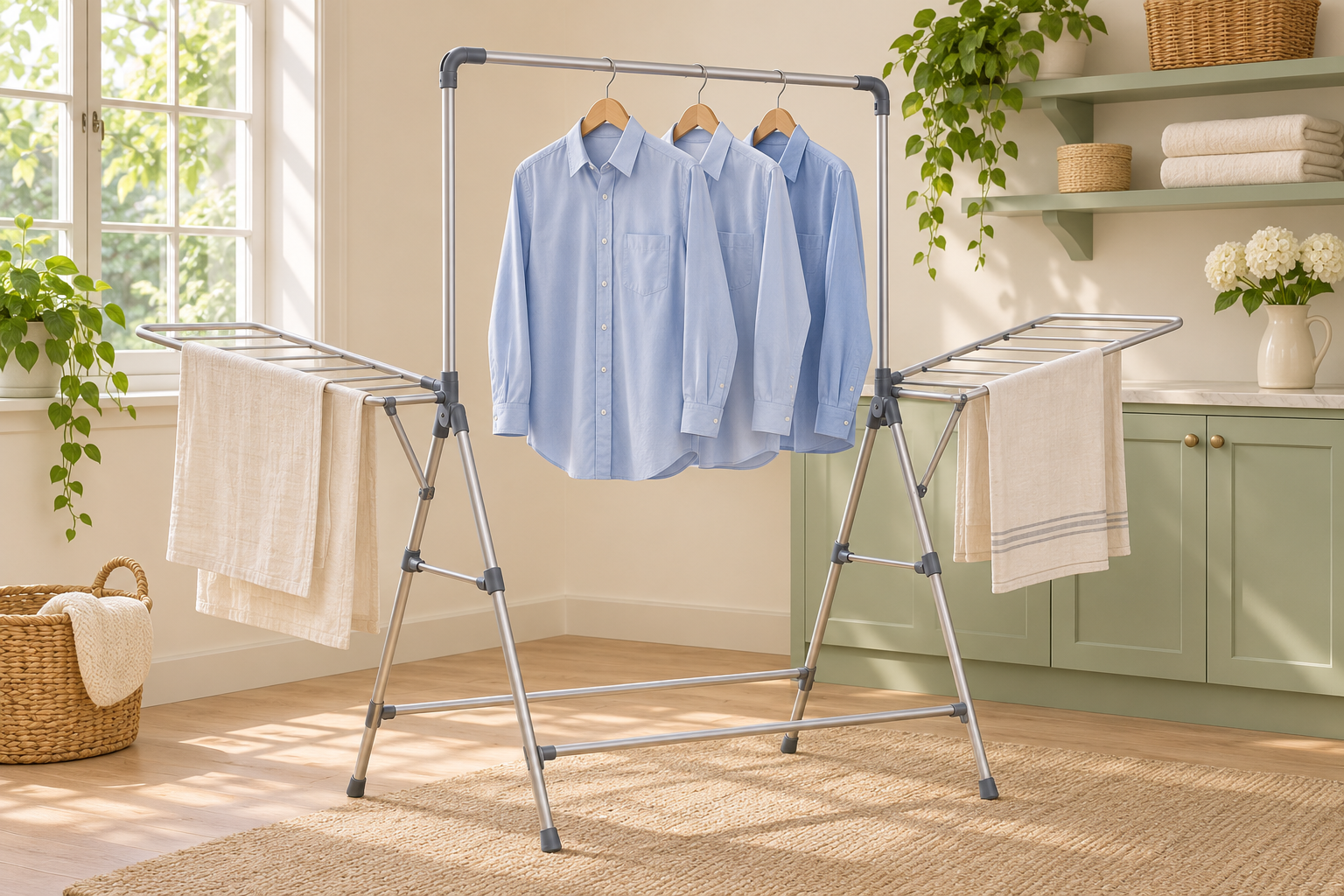
Choose the Brabantia HangOn 25 m with a hanging rod if your laundry routinely includes several shirts that should dry on hangers. Choose the version without a rod if you mainly drape everyday clothes over rails and already have somewhere suitable to hang shirts. Both provide 25 metres of drying length; the extra rod changes how you arrange a load rather than turning the rack into a faster drying appliance.
This comparison uses Brabantia’s published specifications and practical garment-care considerations, not hands-on testing. A rack can help you give clothes space after washing, but it cannot guarantee a wrinkle-free finish. The useful purchase question is whether the extra hanger position solves a recurring problem in your room and wardrobe.
What both versions provide
Brabantia lists adjustable-height wings, eight hanger hooks, a transport lock, a child lock against accidental folding, protective floor caps, and a platform suitable for flat drying on both versions. These shared features matter if you wash mixed loads: wings accommodate different garment lengths, while the hanger hooks provide another way to position smaller numbers of shirts.
The child lock is a folding safeguard, not permission to leave children playing around the frame. Likewise, a transport lock does not make an unevenly loaded rack easy to carry through a narrow doorway. Decide where it will stand before loading, distribute garments evenly, and follow the instructions supplied with the exact model.
Choose the rod for a shirt-heavy routine
Brabantia HangOn 25 m with rod, White
The rod version adds an overhead hanging position to the shared drying layout. Choose it when hanging shirts is a regular part of laundry day. An existing hanging rail can already handle that part of the load.
For White model 403507, Brabantia specifies a rod accommodating at least ten additional hangers, with a maximum load of 10 kg on that rod. Keep that limit attached to the rod rather than treating it as a capacity for every part of the rack. Wet garments and their hangers add weight, so leave a sensible margin and avoid concentrating heavy items at one end.
The main advantage is separation: shirts can hang above the rail area instead of competing for the eight hooks. That may suit a household washing several blouses or work shirts together. It does not mean every hanger position should be occupied. Thick shoulders, long sleeves, and bulky fabrics still need space; closely packed shirts may touch each other or the laundry below.
Choose the standard rack for simpler storage
Brabantia HangOn 25 m, Metallic Grey
The standard version keeps the adjustable wings and eight hanger hooks without the extra rod. Choose it for mixed rail-dried laundry or when shirts already have a dedicated hanging place. The version with the extra rod gives shirts their own hanging space.
The standard Metallic Grey model 403484 is listed at 5.3 kg, compared with 6.1 kg for the White rod model. That difference is worth considering if you lift the empty rack in and out of a cupboard frequently. Neither figure includes laundry. The sensible test is whether you can manage the folded frame comfortably along your actual storage route.
Do not buy the standard version assuming a rod is included because the product family looks similar in a search thumbnail. Check the exact model description and included parts. Colour names and regional wording can vary, so use the presence or absence of the rod as a primary identification check, then confirm the stated drying length.
Measure the working area, not just the cupboard
Allow space for raised wings, hanging sleeves, access around the frame, and the door you need to open while laundry dries. A rack that folds neatly may still dominate a small room when loaded. Before ordering, mark out the intended position and check that neither garments nor legs obstruct the normal walking route.
Confirm the fully open and folded measurements for the exact variant rather than interpreting a compact dimensions field as its entire working footprint. The hanging rod also makes vertical clearance relevant. Check low shelves and sloping ceilings, then imagine your longest shirt on its usual hanger. If the hem would rest on another garment, the extra rail is not solving the support problem.
Match the support to the garment
A shirt suitable for hanger drying is a different task from a wet knit that needs flat support. Follow the garment label first. The shared drying platform offers a flat-support option, but check that the garment fits without stretching or hanging heavily over an edge. One bulky sweater can use much of the useful area even when plenty of nominal rail length remains.
For clothing recently steamed, use the same care-first approach: allow it to dry and cool on appropriate support before putting it away. Our guide to drying clothes after steaming explains that stage. Neither HangOn version should be treated as a heat-resistant ironing board or a dedicated operating stand for a hot appliance.
When neither version is the right purchase
A loaded rack needs to leave a clear path. A fixed rail can be a better fit for permanent hanging space. A cupboard rail, a smaller drying format, or an existing suitable support may address that need more directly. Extra drying length is useful only when you can spread clothes out in the space available.
Brabantia describes the standard rack as suitable for indoor and limited outdoor use, excluding rain and corrosive environments. Do not infer that a steel frame can live outside year-round. Plan dry storage, protect the floor, and inspect the frame before use. For garments heading into seasonal storage, our seasonal clothing guide covers the next step.
Which should you buy?
Buy the rod version when you can name the shirts that will use its extra hanging space and have checked both vertical clearance and storage. Buy the standard version when its wings and existing hooks match your usual load. Compare the exact model details in the search results, and choose the layout you will use regularly rather than the one with the largest headline capacity.
Before comparing the two, list one representative wash load: the number of shirts, the largest flat-dry item, and the longest garment. Assign each a position on your proposed rack. If most of the load needs hangers, the rod earns its place. If most items drape over rails and only one shirt needs a hook, the standard rack is likely the more useful match. This simple layout check also reveals when neither version provides enough unobstructed space for your particular mix.